

Student voice leaders
Student Voice Leaders (SVLs) are paid student partners who work alongside staff in each academic school to improve the student experience.
In summary, Student Voice Leaders…
- Take part in school-level meetings to explore trends in student feedback.
- Work in partnership with staff to design and deliver improvements.
- Share updates with students on what’s changed and why.
Why we made the change
Course Reps were great at raising issues – but too often, those issues got stuck in a feedback loop without a clear route to action. Student Voice Leaders bridge that gap. By being part of school-level discussions and university-wide “Education Hackathons”, they work on solutions from the start, so changes happen faster and communication back to students is clearer.
Giving feedback
We need your feedback to make sure everything we do is student-led, and so we can make sure you’re getting the student experience you deserve. Is there something about your classrooms you wish could be improved? Have you had a stand-out lesson you want to see more of? We have a range of methods you can use to let us know your feedback- good or bad- so that we can pass it on to the right places to see change happen.
Follow the link here for a quick and simple feedback form. If you leave your details with us, we will update you directly to let you know where your feedback has gone and any updates it’s led to. Alternatively, you can remain anonymous instead; we won’t be able to update you directly, but your feedback will still be passed on in exactly the same way.
The BSU Students’ Server is a Discord server for all Brighton University students. It’s an online hub to talk to others on your course or studying similar subjects, chat to others with the same interests, and share your feedback directly to BSU. There are BSU staff and student moderators on hand who can reply to any questions or messages, whether it’s about life at university or beyond. If you have ever wanted one place online to talk to other Brighton students and find helpful information, you should join the BSU Students’ Server!
Join Here
Meet your SVLS
Student Voice Leaders are student staff, recruited and trained by BSU to represent your feedback at university meetings and come up with solutions that have the student experiences in mind. There are around 50 SVLs, who each represent several courses in similar subject areas.
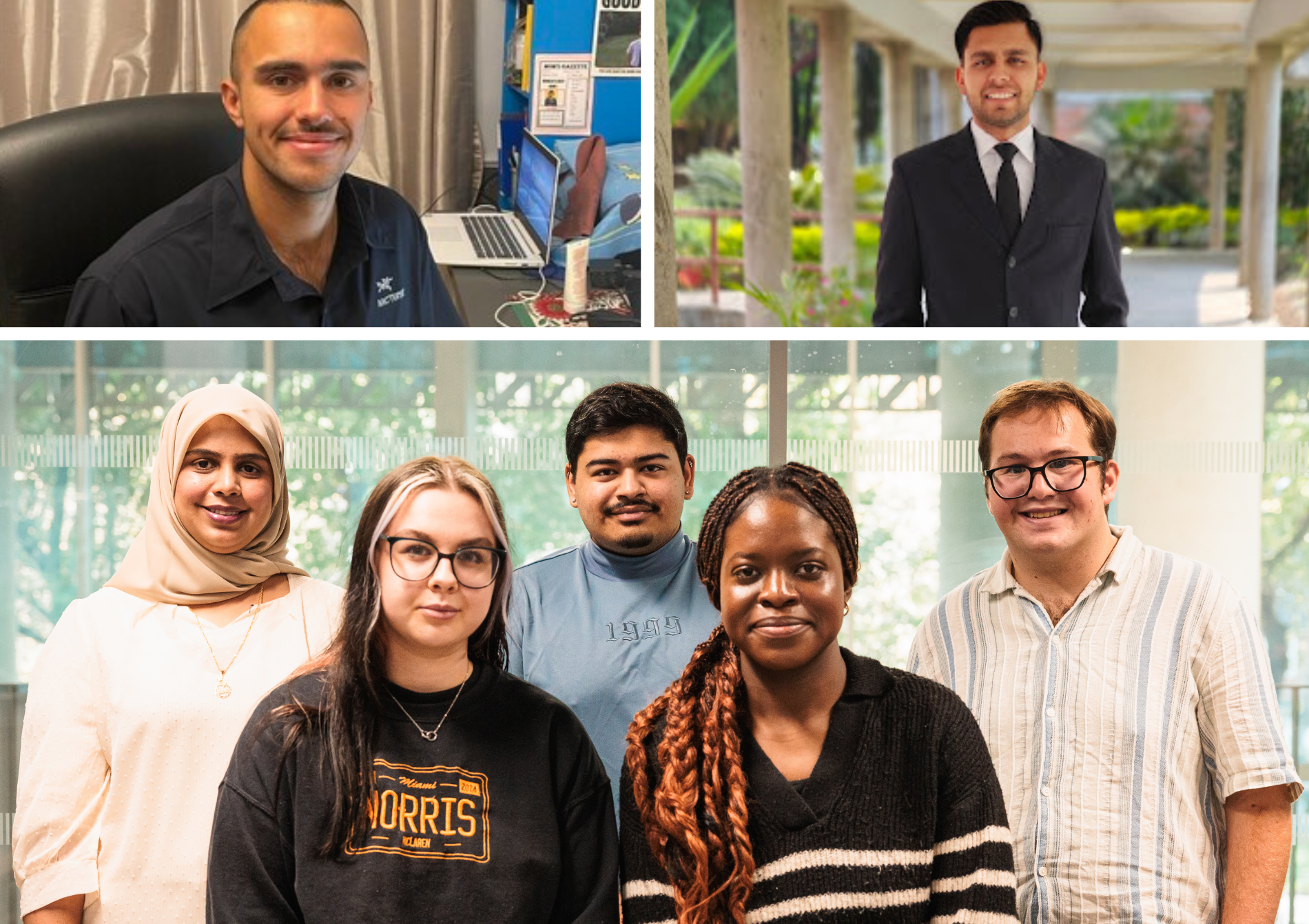
School of Applied Sciences
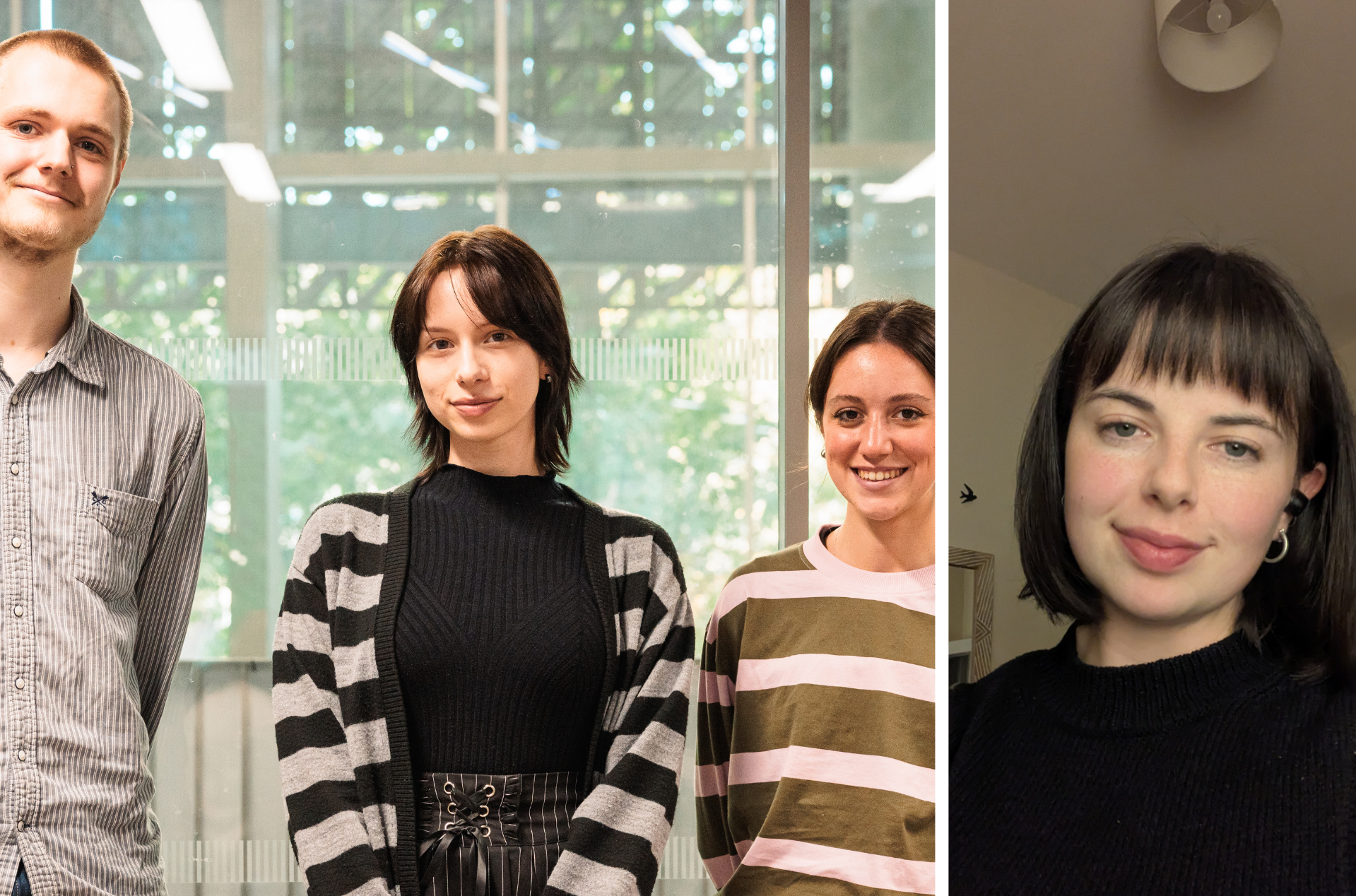
School of Art and Media
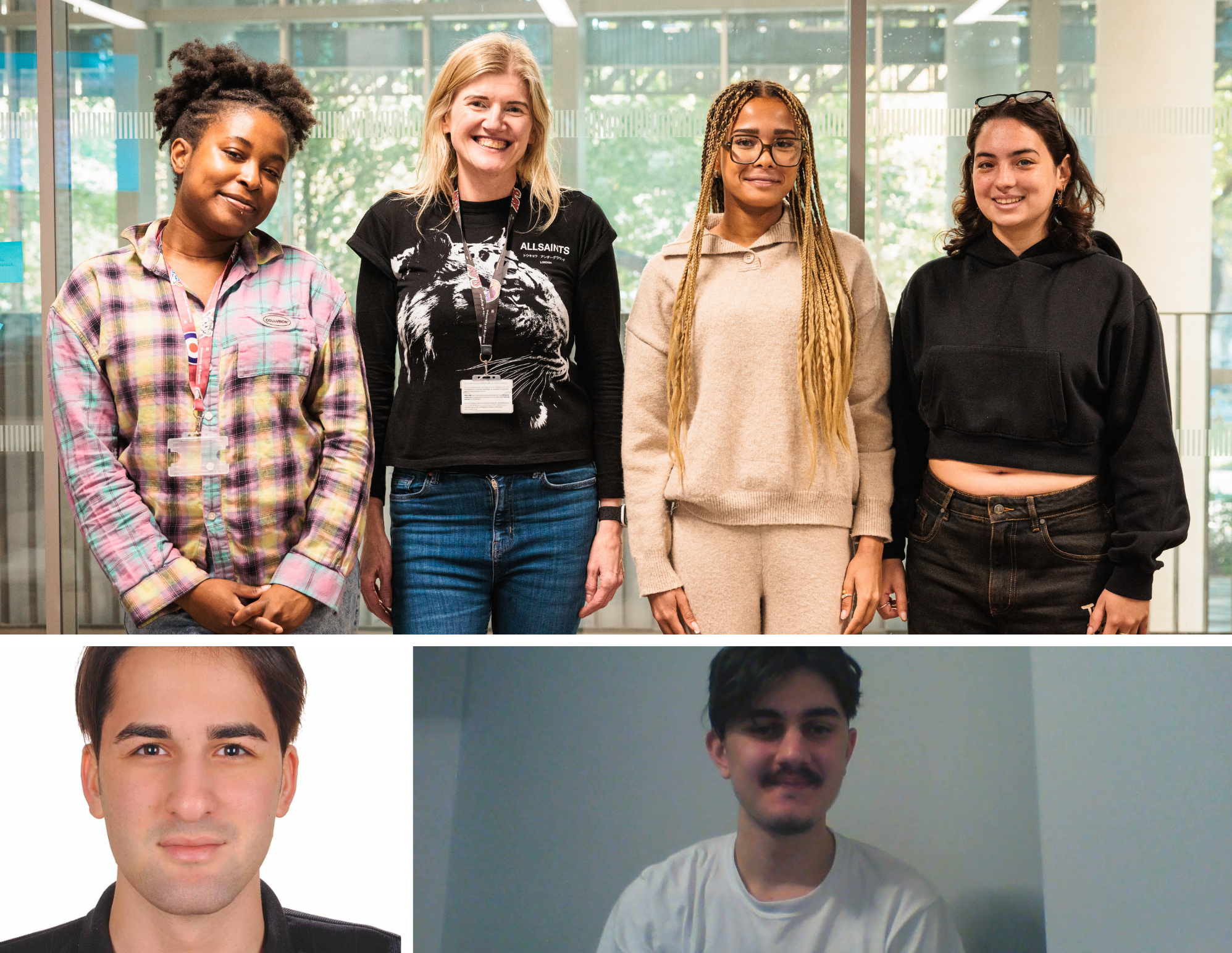
school of Architecture Technology and Engineering
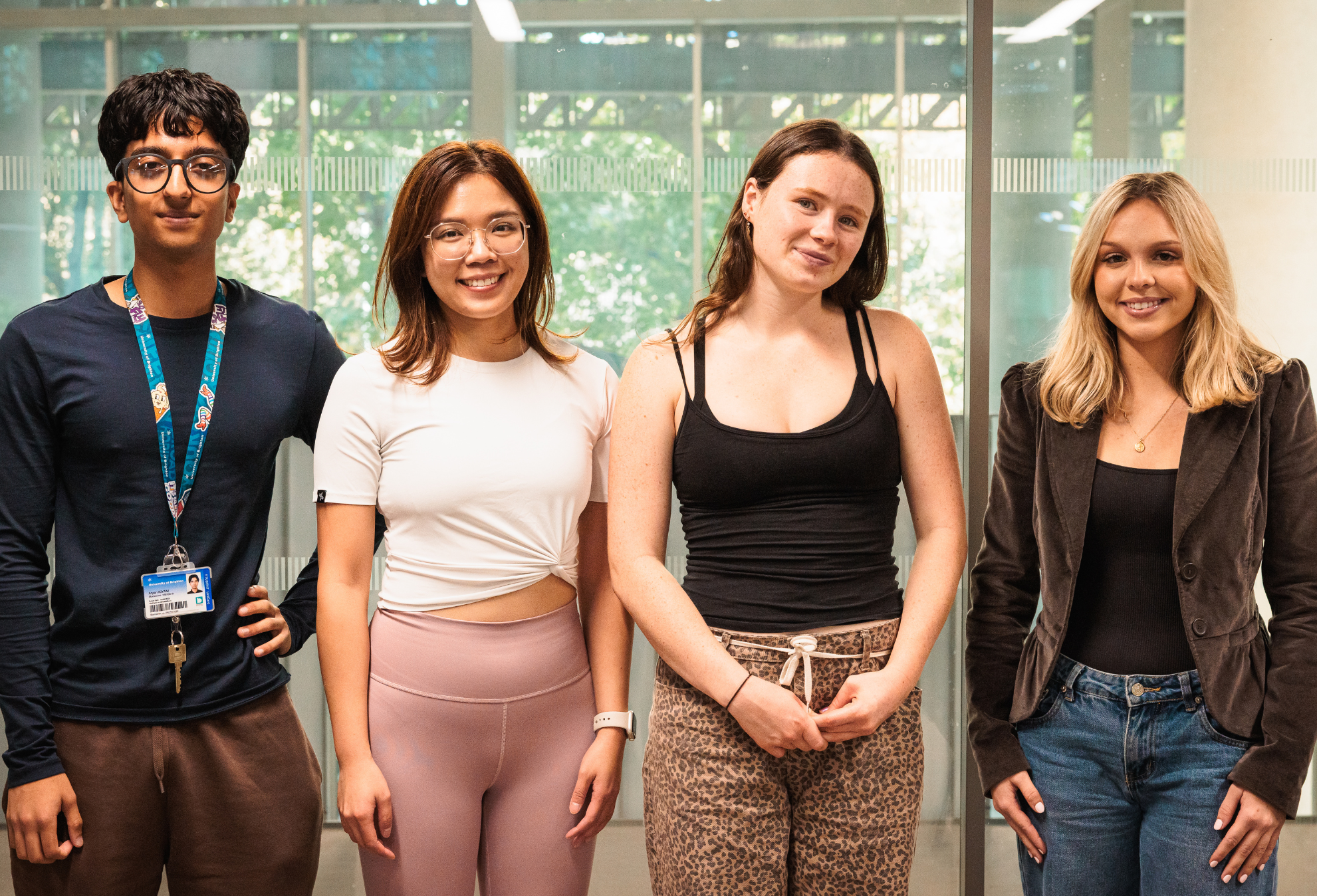
School of Education Sport and Health

School of Business and Law
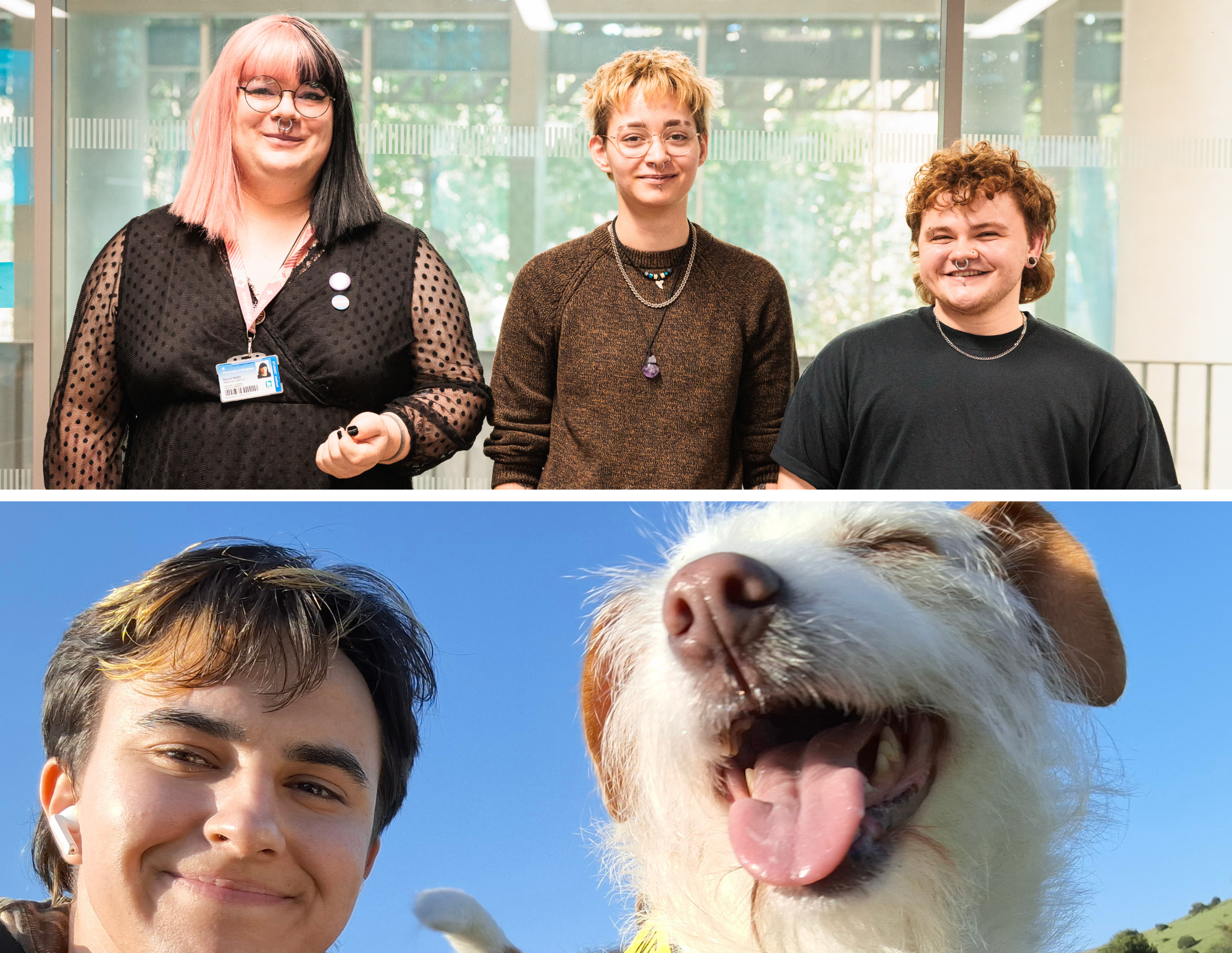
School of Humanities and social science
You can find out which SVL represents you and how you can contact them here
Third term recap
Welcome Back!
Summer is well underway, which means conference season, annual reviews, and (hopefully) a chance to enjoy some sunshine away from the lab. This issue celebrates some fantastic achievements within our doctoral community, highlights some feedback, and shares opportunities to get involved. As always, if there’s something you’d like to see featured in a future issue, just let me know!
Keeping You in the Loop
Here are a few key updates from the latest SRAKE meeting:
- A monthly seminar series for PGRs and SAS staff has been proposed to encourage research sharing and collaboration.
- The whole of SAS will now move to the College of Health, rather than being split across two colleges.
- Funding is available to support conference attendance before the end of the financial year. Speak to your supervisor for details.
- COREs have additional funding available for students. Make sure you’re part of a CORE so you can access these opportunities.
- A SharePoint lab booking/log is being proposed to help monitor equipment use and encourage everyone to leave shared labs clean and tidy.
The point of contact for anything urgent over the summer will be Wendy Macfarlane or Martin Smith, but please contact your supervisor first.
Researcher Spotlight
A huge congratulations to Dr Natalie Crump on successfully defending her PhD thesis, “The Role of Glucocorticoids in Facilitating Breast to Bone Metastasis.”
Many of us have had the pleasure of working alongside Natalie over the years and have seen first hand the commitment, resilience, and hard work she’s put into reaching this milestone. We’re so proud to celebrate this achievement with her. Congratulations, Natalie—we wish you all the very best!
Survival Tip of the Month
Book a Meeting With Yourself
Block out time in your calendar for writing or analysis. If it’s important enough to schedule with someone else, it’s important enough to schedule with yourself.
Community and Wellbeing
Join us for a Pitch & Putt social at Roedean in August! It’s a great opportunity to take a break from research, meet and enjoy a relaxed game— no golfing experience needed.
If you’d like to take part, get in touch with Anisha, we’ll confirm the date and send out the details. We hope to see you there!
Events and Workshops
Online Statistics Summer Course
Hosted by the Southampton Education School, each of the six (AM/PM) sessions combines 50% theory with 50% hands-on practical exercises. Attendees can choose to attend any or all of the sessions.
For more details, follow this link
Your feedback really matters, it’s what helps shape real, meaningful changes to the PhD experience. If there’s anything you’d like to share (good, bad, or somewhere in between), you can post it via the Padlet or email me directly .
School of Art and Media Termly Bulletin
This term I had a meeting with Doctoral Studies Lead Paul Sermon on 25th June to discuss PGR’s questions around opening hours for the café and art shop; access to workshops over the summer; greater need to share info at inductions and changes to the school as it becomes a department.
The SAM PGR ‘Coffee and Buzz’ social group has been meeting regularly every fortnight on Thursdays in the PGR office – Room 155 in Grand Parade. SAM PGR’s are welcome to join from 12-2pm to socialise and discuss any support needs. Sometimes during sessions, PGR’s show work and slides and discuss ideas arising from their PhD’s.
An impromptu PGR art exhibition emerged out of one of these sessions. It was entitled, “A Question of Volume” and was curated by SAM PGR Jo Bell. It took place at Edward Street’s ground floor gallery space and ran from Friday 12 th June to Thursday 18th June. SAM PGR’s taking part were Ruohan Yu, Ola Teper, Deborah Humphrey, Jo Bell and Jennifer Jones.
The SAM blog run by Karen Gainsford gives a fuller picture of events created by and for SAM staff and PGRs.
If you have any questions or comments re: your PGR experience, please feel free to contact me at [email protected] or use the SAM padlet on the doctoral college site: link to SAM padlet: https://padlet.com/universityofbrighton/pgr-comments-board-forschool-of-art-and-media-wilvtlhbaqj6vx26 Comments on the padlet can be made anonymously.
PGR REPS UPDATE – CLOSING THE FEEDBACK LOOP – Term 2 – 30/3/26
I met with our DSL, Clare Woodford, on 3rd March with Tom P & Saif to discuss the issues raised in our new PGR feedback padlet. Below is the feedback from that meeting, feedback that hopefully closes the loop. However, if it doesn’t and you still have questions or issues please raise them on the padlet or get in touch with me.
Teaching Contracts:
Lara Perry and Lesley Murray are aware that there have been inconsistencies with PGR teaching contracts and want to sort these out.
Advice from Clare is that a contract should not be GTA when PGRs are teaching or leading lectures. Where PGRs are teaching with some support that might be HPL or might be GTA. If PGRs receive lots of support, it is GTA. Where someone else is leading the module and you, therefore, have someone to speak to and get support from, then it’s GTA.
Clare, Lara and Lesley agree that the system in incoherent. And Lesley has taken our feedback to Rusi, who has said he’ll be looking at this again.
For any PGR concerned about their teaching contracts:
- Email both Lara Perry and Lesley Murray detailing any problems with your teaching contracts. This is important as it is written evidence they can use to show there is a problem across the board and need as many cases as possible to enable this.
- If you would like to speak with Lara or need her to help you with your teaching contract urgently, ask to meet with her in your email.
Teaching contracts background:
Your actual contracts come from HR. Who are given the work contract information by the school.
The person currently responsible for this in HSS is Mark Wright, Associate Dean of Academic Operations.
Lara Perry, who is Head of the School, can override things.
Apparently, teaching is allocated from the spreadsheet that Chris Matthews collates from our responses to his Expression of Interest to teach email. All the subject leads have access to this spreadsheet and when they need teachers they go to the spreadsheet. They then approach you to teach, this may be in the corridor (which is you being asked in person) or by email. It’s done like this rather than have PGRs apply for specific jobs because they want everyone to have a chance to teach. Also, subject leads often only have a few hours to find someone to teach, for example, when people go off sick, on parental leave, etc., subject leads don’t often know in advance.
The subject lead decides which contract PGRs should be put on and Mark Wright sends this information to HR. However, the contract PGRs are put on is dependent on what the subject leads knows about GTA and HPL. But they often don’t know what they are doing and have no authority to change things. You should speak to Lara if you feel you’ve been put on the wrong contract.
FYI – Clare advises, that when completing the EOI don’t undersell yourself, tell them everything you can teach, be as expansive as possible. Basically, they want to know what you can ‘mug up on’ because you’re an excellent researcher, and teacher.
IT ISSUES INCLUDING ACCESSING LSPs
Clare has put us in touch with IT and Tom Pryce and I will be meeting with them to discuss the issues we are experiencing with IT. However, it is proving difficult to get a time that works for all of us. Once we have managed to meet with IT I’ll update you with more information.
FIRST AID & OTHER EMERGENCIES WHEN TEACHING
Clare has now sent an email to all PGRs with information on who we should contact in the case of an emergency when we are teaching.
We suggested that PGRs who teach should be given training on what to do in emergencies, as well as safeguarding training.
Clare is going to arrange a meeting for Tom and I to speak to HR about this. I will update you with more information once we have had this meeting.
As we head towards the Easter break and the weather finally starts to brighten up, it feels like the perfect moment to share a quick update on what I, and the other Student Voice Leaders, have been working on behind the scenes to help improve our school experience.
Over the past few months, we’ve been working with staff alongside the BSU’s Subject Activity initiative, to develop some new ideas of activities for students to do outside of university hours. This opportunity for you to connect with your fellow course mates and engage in activities you might not otherwise do is something I find so important, especially for connecting with people on your course and enjoying your time here at Brighton outside of the classroom. There are some exciting ideas in the works so keep an eye out for what’s coming up soon!
Another key focus for us has been looking at how taught sessions can be made more interactive and engaging across the School of Applied Science. This is something that comes up often in student feedback, and it’s great to see staff actively working to enhance learning experiences. That being said, it’s equally important to recognise what’s already working well – courses within Geography, Ecology and Environment received particularly positive feedback about teaching quality and support. As a student on one of these courses myself, this definitely resonates with me and it’s encouraging to know that others are having positive experiences with our academic staff.
This term, I also had the opportunity to attend an online workshop focused on the use of AI in education. This is something that has been growing in significance across the university, so it was really insightful to see how AI can be used as a tool to support learning and understanding, to directly benefit students. Building from this, SVL’s briefly discussed how AI can be more effectively integrated into the work being done at the university with the University’s Pro-Vice Chancellor for Education, David Walker. This included considering the success of the current AI policy and RAG rating system for
assignments across different schools and type of content, and how the guidance on usage could be improved. This is something I have found to be sometimes confusing or inconsistent across assignments, and would love to hear any feedback on how the current system is working for you!
On that note, just a quick reminder to keep posting feedback on your course Padlets! They’re a really important way to have your voice heard, and allow us and academic staff to understand what’s going well, what needs improving and how we, as SVL’s can help!
That’s all for now! I wish you all an enjoyable and relaxing Easter break, hopefully with some more of this good weather! And best of luck as we head into the final term!
As course representative for my undergraduate degree, I was excited to see the changes that would be made with the new student voice leader system within the university for handling student feedback, whilst the course representative model was good, there was always an issue with bridging the gap between the feedback and the changes, even if those changes were made. With the new student voice leader system, these are the very issues it aimed to solve, and I can already see this happening. The training I have completed so far has been highly informative, with systems in place for when our voices are not being listened to or tangible changes are not coming to fruition. Furthermore, the focus has been shifted from us as student voice leaders being responsible both collecting feedback and proposing solutions, to focusing solely on how to improve our courses based on student feedback. This is not as difficult with cohorts as small as the law conversion masters but will be invaluable for much larger classes where constant feedback can be overwhelming. I would still encourage my cohort to use the padlet and other platforms for providing feedback as it can ensure it is all in the same place and easy to collate for future meetings.
As for the meetings I have attended so far, the feedback I have provided from the cohort has mostly consisted of issues with the first introductory week, as due to the nature of the course, it is often a sharp turn from previous fields of study to law. However, my fellow class and I are thoroughly enjoying the modules we are currently undertaking. Some of the changes and solutions I have suggested through talking to my cohort are more thorough explanations of the law referencing system (OSCOLA), a greater focus on study skills, and most importantly help with the decision we must make very soon for whether we will undertake a dissertation or a street law project, of which we have now received some more information on, and we have now had a lecturer speak to us in our seminar about what the street law project entails. Looking forwards towards the future, I would like to place a greater focus on providing solutions, especially with the aforementioned study skills, perhaps by coordinating some sessions in the library or booking a study room where we can sit down with each other and focus on the areas we are struggling with, such as a weekly or bi-weekly study group. I will also endeavour to get the information on when our exams will take place in the end of January.
As we head towards the summer break, it feels like a good opportunity to reflect on what’s been happening across our School of Business and Law postgraduate research (PGR) community and to look ahead to the new academic year.
A huge thank you to everyone who joined this year’s Present & Discuss session and creative wellbeing workshop. Both offered valuable opportunities to step away from the day-to-day demands of research, connect with fellow PGRs and share experiences in a supportive environment. Research can often feel isolating, so creating spaces where we can learn from and encourage one another continues to be an important priority.
Before many of us head off for a well-earned break, there will be an informal PGR brunch on the morning of Tuesday 28 July. It’s simply a chance to catch up with fellow researchers over coffee before the new academic year begins. Further details will be shared soon.
Looking ahead, Present & Discuss will return in the autumn. These PGR-only sessions (with no supervisors or academic staff present) provide an informal space to share research, discuss ideas and ask questions in a relaxed setting. Alongside these, there are some exciting researcher development sessions being planned for Semester One, with more information to follow in September. If you have ideas for workshops, discussions or social activities, we’d love to hear them.
One way to help shape future activities is through the SBL PGR Padlet. It’s there to gather ideas, suggestions and feedback from our research community, but so far it’s been rather quiet! Whether there’s a speaker you’d like to hear from, a workshop you’d find useful, or a social event you’d enjoy, please do add your thoughts
There is also an SBL PGR WhatsApp group for anyone who would prefer to receive updates and stay connected with fellow researchers. If you’d like to be added, please get in touch.
Finally, a sincere thank you to Dean Kate Robinson, Associate Dean Stefan Speckesser, and Doctoral Studies Lead Ceylan Onay Smith for their continued support of postgraduate researchers during a period of significant change across the University. Their ongoing commitment to our studies, research, teaching and wider development, alongside planning for the year ahead, has been greatly appreciated.
Wishing everyone a restful summer, and hopefully see many of you at the brunch and our autumn events.
We have officially made it to December. If you are anything like me right now, your brain is functioning on 40% caffeine, 50% deadline adrenaline, and 10% pure anticipation for the Christmas break.
As we wrap up this term, how about a nice update from your friendly neighborhood student voice leader?
I wanted to step back from the usual course updates and do a nice Boardroom-style review of my first semester as your SVL. Think of it like a mid-term election speech, but without me screaming into a microphone, “Vote for me!”
First, let’s start with The Wins:
Outside of connecting with all of you and having a bit too much of a blast at The Venue, I wanted to share a few behind-the-scenes highlights.
A few days ago, I represented the Finance and Accounting cohort in the Curriculum of the Future Workshop. This wasn’t a standard feedback session or a panel of keynote speakers. It was SVLs and staff collaborating to define the principles guiding future modules. Our goal? Ensure every module maximizes the student experience, not just administrative convenience. We reviewed principles covering everything from inclusive design to the ethics of technology integration.
A second win was the Eduthon. Picture a Comic-Con for SVLs where we came together for collective brainstorming, and to play with Lego and Play-Doh apparently. We sat together with staff and members of the student union and strategized ways to improve the overall student experience.
For example, we discussed the lack of structured activities for students to build that essential network of friends. It clicked for me immediately. Based on that conversation, I worked with our Course Leader to organize more social hangouts after school trips. Because let’s be honest, the best networking usually happens after the books are closed.
Now, let’s talk about the ‘Work-in-Progress’:
A major topic from the Eduthon was the timetable. We need a schedule that drives academic rigor but also allows us to be dynamic students who join societies and clubs. We are collaborating with staff to find a student-focused solution. Trust me, we are brainstorming!
Additionally, for a focused class of postgraduates, the friction regarding course materials is a bottleneck. Specifically, access to textbooks for specific modules has been a challenge. We are working to ensure everyone has easy access to learning materials, whether via digital licenses or library copies. We shouldn’t be fighting for the tools we need to do the job.
Since you probably won’t see me posting #NewYearNewMe, let’s call these our New Year resolutions. But with that comes my little request. One can say it is your Christmas present to me: A busy Padlet.
I know typing feedback into the Course Padlet can feel like shouting into a void, but having sat in these meetings, I can tell you that it is not a black hole.
It is actually our most powerful tool. When I bring up the textbook issue or the congested timetable, it carries 10x more weight when there is a Padlet trail of other students saying the exact same thing. So if you are struggling with a resource, if you love a lecture style, or even if you just want to say how dashing your Student Voice Leader’s outfit was in class today (okay, maybe not that), feel free to log it. No feedback is irrelevant.
And there you have it, folks! A great semester behind us and a great semester to come.
I hope you all have an incredible holiday. Rest up, recharge, and enjoy the food. I fully intend to return to campus with an extra 20kg. You can blame it on the holiday dinners and Christmas cookies.
See you in the New Year!
Second term recap
Student Voices Turned into Action: Here’s What’s Happened So Far
Hello everyone. Since my last blog back in December, I am proud to say that things have progressed, and it feels like we are moving beyond just discussions. We can actually start to see the changes happening. You said it, we raised it, and it is now taking shape.
In mid-December, we had our second Student Voice Forum meeting with the Dean. About a week before that, we had a pre-meeting session where all the SVLs came together to discuss and organise the agenda based on issues raised by students across different courses within the School of Applied Sciences. The main topics included classroom upgrades with better facilities, timetable issues, and making courses more interactive. The school and the Dean were very positive about what students had shared. It was a genuine discussion where everyone was engaged and working towards meaningful change.
During the meeting itself, we were informed about planned upgrades starting from the Christmas break. When we returned, it was great to see that these changes were actually happening. While some improvements are visible, others are taking place in the background. I can assure you that actions are being considered and implemented where possible based on student feedback.
I also had the opportunity to be part of a focus group meeting, discussing curriculum planning for the future. This was really a valuable experience, as it felt like contributing to something bigger with long-term impact. Topics like developing future skills during university and preparing students for real-world challenges were key parts of the discussion. There are several such focus group sessions happening across the university, and I would strongly encourage everyone to take part whenever possible. You will realise that your voice truly matters. Even if we may not directly experience all the changes ourselves, we are helping shape a better experience for future students.
And yes, we also had our second EDUTHON on 19th March, and I honestly enjoyed this one even more than the first. We revisited previously discussed issues and received updates on what had been implemented. It was great to see that student voices are making an impact. We also explored other new challenges faced by students across the university and came up with possible ideas for solution.
Overall, this period has made me feel proud to be an SVL. It’s not just about raising issues but also about seeing those discussions turn into real outcomes. As always, I encourage all of you to share the feedback through the student feedback padlets available on My Studies. The more we hear from you, the more we can push for meaningful change. Even if this is your final year, your feedback can still contribute to improving the experience for future students. From what I have seen so far, your voice really do matter.
Graphic Design (BA) and Illustration (BA) Student Voice
Since my last update on the communication between the staff and the student body of the Graphic Design (BA) course, I have made sure to keep up the conversation between the students and the University, to ensure that every piece of feedback gets reviewed and considered, when improving the student experience at UOB.
Regarding university-wide issues, I have had the chance to participate both in the follow-up Eduthon, as well as the Curriculum Focus Group – events focused on collecting and reviewing student feedback, as well as creating solutions for the discussed problems. During the latest Eduthon (19.03.2026), SVLs focused in depth on students’ concerns regarding disability support and the LSP system, international student support, and issues with the collection of feedback via the Feedback Padlets. All the comments on these topics have been collected, reviewed, followed up with ideas for improvements, and administered to their respective departments. The Curriculum Focus Group (17.03.2026) centered around the discussion of clearer course structuring, placement support, and the prioritization of real-life practice implementations into each course, to help students with a smoother transition from graduation to their careers post-university.
The comments made by Graphic Design (BA) students helped implement improvements, which can be seen across all levels:
– Entire Course: The Graphic Design Staff has improved their inner communication and has been providing students with Research and Development Document examples.
– Entire Course: The 150 Studio now has new computers available for use to students of all levels.
– Entire Course: The Graphic Design Staff is working to implement formative feedback sessions to make sure students are aware of their predicted grades before their final assessments.
The feedback from the Illustration (BA) Course has also allowed us to highlight several comments that will be reviewed and discussed during the next Student Voice Forum.
– Level 5: Many students would benefit from a personal studio space, as they would feel more encouraged to come into the university to work on their projects and feel more engaged with the course.
– Level 5: Some students do not feel a sense of community in the course.
– Level 6: Many students are concerned about how budget cuts, as well as cuts to staff hours, will affect them during their last year.
This feedback is incredibly helpful for improving the student experience at the University of Brighton, and we encourage everyone to express their needs, concerns, or positive reviews, so that they all can be taken into account during SVL Student Voice Forums.
Student feedback is taken from the Student Voice Padlet.
The Padlet Boards for Student comments are available on MyStudies, in the ‘BA(Hons) (Graphic Design/Illustration) Course MyStudies’ section. The Padlets for all Levels can be found in the ‘Student Voice’ folder. Please leave your feedback regarding your experience with your course. All the comments are reviewed and discussed during Student Voice Forums.
Hello everyone! For those who haven’t met me yet, my name is Anne-Sophie Labossiere, and I’m your MSc Maths and Computing Student Voice Leader. My role is to represent your experiences, share your feedback with the university, and help make positive changes to improve your time here.
This term we’ve been working closely with lots of different university teams to represent your feedback. One of our key moments was the Student Forum on January 12th, where we shared new course feedback and heard updates on actions taken from feedback you’ve given in the past. We’ve also been following up on a range of actions from previous meetings. These include things like improving communication around timetabling changes, making updates to course content (such as specific modules), and working with teams to improve study spaces and facilities across campus. There’s also been progress in sharing Student Voice Leader content so you can better understand what we do and how to get involved.
This week, we held an exciting “Eduthon” (a mix of education + collaboration!) where Student Voice Leaders came together to focus on three really important areas: international student experience, Learning Support Plans (LSPs), and feedback collection.
For international students, the big takeaway was that creating a stronger sense of belonging on campus goes beyond academics. The focus moving forward is on developing more events and social opportunities that build support systems and prioritise mental health and wellbeing. The goal is to make campus feel like a community where everyone feels welcome, supported, and connected.
When it comes to feedback, we know how important it is to make sharing your thoughts simple and effective. Right now, tools like Padlet have been useful, but we agreed that the next step is to create an official, easy-to-access feedback form. This may undergo some change very soon so keep an eye out for updates!
For Learning Support Plans, the conversation focused on improving communication and awareness. Many students aren’t fully aware of the support available or may feel unsure about accessing it. The plan is to introduce more ways to communicate these services and raise awareness around different learning needs. By doing this, we hope to reduce stigma and make support feel more accessible and encouraged.
Looking ahead, our next Student Forum will take place on the 24th of March. This is a great opportunity to bring forward your experiences. if there’s anything you’d like me to raise, please don’t hesitate to reach out. Your voice genuinely shapes what happens next!
That’s all for now. but there’s plenty more in the works! As always, your feedback is at the heart of everything we do, so don’t hesitate to share your thoughts or concerns on the course Padlet.
Wishing you all the best for the rest of the term!
Last month we had the opportunity to talk through the feedback that students have provided on their course padlets. There was an overwhelming amount of positive feedback about the sport and health science courses. With lots of students loving how their course links to their future career aspirations and how they are able to apply the theoretical skills in practical applications. There was lots of positive feedback on the practical lab sessions especially on the sports science course. As always, we really encourage students to use these padlets to ensure that they are getting the most out of their experience and their course. With out your feedback there will be no change at the university.
Some of the feedback that we received that we chose to focus and improve on was the structure of lectures. Students shared that they found some of the bigger lectures intimidating and needed them to feel more interactive.
As SVLs we came up with some ideas that could be developed into helping the students. These included:
Using small groups:
More encouragement and opportunity to work in small groups or pairs. Sitting in a big lecture hall for long periods of time and be difficult for some students giving them time to talk and share their ideas.
Small groups allow the lecturer to talk to more of the students in a short period of time. and gage a better understanding of how the student have interpreted the lecture and help them better understand the content.
Incorporating tasks and activities into lectures:
Small and simple tasks incorporated into lectures can also really help students to stay focused and apply the knowledge they have learnt in the lecture. Although lots of the sport and health science course have lab and practical sessions to apply their knowledge. Theory and practical sessions can often be a week apart. giving students an opportunity to apply their knowledge throughout their lectures too can mean that they retain more of the knowledge and the lab/ practical sessions run more smoothly.
Thinking and discussion time before answers:
Some of the students shared that they struggled with participating in big lecture halls especially when they have to talk or answer questions in front of their whole course. A solution to this was informing the lectures on these courses that the students would like to have some time to discuss answers before sharing their ideas with the whole group.
In conclusion the response on the padlets was very positive and the majority of students are loving their time at the university of Brighton. As SVLs we have worked together and with members of staff and lecturers at the university to discuss and develop ways that we can communicate the feedback with the lectures and help develop the courses and teaching styles to best fit the students.
Hey guys, Brendan here, one of your student voice leaders for the history and writing courses! This post will be covering what we’ve been up to over the last few months to enhance your experience at university, including the meetings we’ve had with academics/university staff and the changes that you have hopefully already seen, as well as others currently in the works.
In late January myself and the other Humanities and Social Science SVL’s gathered with student union staff and our associate Dean Megha Rajguru to chat through semester one’s Padlet feedback across each subject and year group, bringing with us the key issues echoed across courses and potential solutions. Here are some of the things I raised after reading through all your great feedback:
Assessment feedback was often lacking in detail or confusing; it was proving difficult for many to take that feedback forward into future work.
This is something I’d heard a lot on my course and others, something I’d also experienced in previous assessments, so I really understood how important it was that we found a way to resolve it. The suggestion I brought forward was pretty simple: we needed a standardized way of feedback to be given to students, making it obvious what worked, what didn’t, what LO’s we’re covered and how to improve in the future. I’m hoping that many of you have already seen this change in place; our lecturers now have a process to follow when marking our work that covers these points in a way much easier to understand. But as always, no matter how clear this feedback is every student always has the opportunity to speak to their peers at any time, whether that be the person who marked your work, PAT tutors or support staff within the school. If you ever need to chat but don’t know where to go, you’re always welcome to reach out and we can point you in the right direction!
I noticed how little feedback we were getting in Padlets from certain courses and year groups
This one is a little more difficult, of course you guys always have free will to respond (or not) to Padlet feedback and module evaluations, but we do really want to prove just how important those answers are. That’s in part why I’m writing this blog today, if I didn’t have Padlet feedback to go off then I would’ve had nothing to take to our staff! Your voices are vital to our school; everything we’re doing in this role is to improve the experiences of students and as such we wanna hear everything you have to say! Even if it doesn’t feel relevant or important, it could be the deciding factor for implementing a great change, so we would always be grateful to read it. Padlets and surveys are completely anonymous (you can add your name if you want) so please be assured nothing bad will happen if you provide negative feedback!
I hope you’re all getting some well-deserved rest after smashing your semester one assessments, as always if you need support in any part of your course be sure to reach out to the wide network of help available at our university and please, remember to fill out your course Padlets!! Hopefully I’ve done well explaining why they’re so important for us, and I hope I can continue using your voices to improve everybody’s courses and make your time here even better.
It’s been a really good term so far being a Student Voice Leader for the MRes courses . As the cohort has been busy getting into the nitty grittys of their projects, the padlets have been reasonably quiet seeing as most people
(me included) picked modules exclusive to the first semester so that we could really knuckle down and get to grips with our research. That being said, if anyone does have any feedback they would like to share, it is still
very much appreciated!
 But, and I can’t stress this enough, please put it on the Padlet as even though I would love to spend my afternoons Whatsapping away and then transforming our conversation onto a Padlet – the master’s course is getting quite
busy.
But, and I can’t stress this enough, please put it on the Padlet as even though I would love to spend my afternoons Whatsapping away and then transforming our conversation onto a Padlet – the master’s course is getting quite
busy.
But enough about Padlets…
I bet you’re wondering what I’ve been up to as a student voice leader. Or at least I would hope so otherwise I’m not too sure why you’d be reading this lol … . At the start of February, I was lucky enough to attend the refresher training session. Why lucky you may ask? This is because there was not just one domino’s pizza, but TEN! They even had coeliac and vegetarian options — they really do treat us well. It was nice getting to know and collaborate with more of the SVL team as there were a lot of students from the city and Falmer campuses as well. There were many exercises which we did surrounding the topic of feedback and how to process it in an efficient manner.
Another forum which I found very interesting was one where we discussed the universities A.I policy and before you start wondering — no I didn’t write this on ChatGPT (I just really like using double hyphens!). But all jokes aside, the discussion about A.I policy was extensive yet very concise. It felt like the opportunity where I was most able to express myself to staff members and share my views on a topic I feel strongly about. We made it clear to university staff that there need to be more done to train staff in understanding A.I. This is so that each lecturer who sets assignments whacks a big old red no AI label on it because they think that A.I is a tool made by the devil to undermine the institution they work for. We thought this was especially a pertinent point for the arts and humanities where A.I may not be used as much in industry unlike STEM subjects. Regardless it was a very interesting the debate which felt like it could’ve formed some of the foundations of refining the A.I policy at the university.
I hope everyone has a nice rest of the term and remember if you have any feedback to put it on the padlet so we can discuss it at our meetings!
Hey everyone! It’s Cinar, your Student Voice Leader for the Architecture and Design department. Just wanted to give you all a bit of an update on what I’ve been up to this term as your SVL, and honestly, it’s been a busy one!
So first off, I had the chance to meet with the Deputy Vice Chancellor, KeneIgweonu, and bring forward some of the things we’ve all been feeling about uni life. One of the main things I raised is that there’s a bit of a disconnect across the university at the moment. Like… we all exist, but not really together.
I suggested that we need more big, university-wide events—the kind that bring everyone into the same space. We already have things like Summer Shows or the Sports Awards, but they’re quite course-specific .Why not scale these up and make them proper whole-uni moments?And honestly, this doesn’t even have to be a budget issue; sponsorships and partnerships could easily help make this happen. I also met with ATE Student Engagement Lead Idil Fenercioglu Aydin, where we talked about how to improve things specifically within ATE. Through both my SVL role and my role as Vice President of the Architecture Society, we’ve been working on events to connect different courses more and build a stronger sense of community.
I raised concerns about the Architecture floor, especially the carpets. I won’t lie, they’re in a state . Compared to other faculties, it’s clear this area has been overlooked, and there are even potential health & safety concerns. It’s also not a great look when prospective students notice it straight away on Open Days. I’ve questioned why this space hasn’t been included in the University’s on going refurbishment programme, and I’ll keep pushing this until we see actual change.
Also,I mentioned that the condition and comfort of the chairs have been brought up as an issue. It’s still being discussed whether these can be replaced, and in the next meeting we’ll be talking about preferred chair types, so hopefully we’ll see some change. On a more collective note, all SVLs have asked for the SharePoint area to be made more user-friendly and easier to access, so hopefully we’ll see improvements there soon.
Dear student colleagues and all staff,I would also like to update you on developments since our previous meeting last term.
Mithras House:
• Food options have improved, and there’s now a £2 meal deal (love that for us)
• The restaurant unfortunately can’t reopen right now due to resource and demand issues,
• BUT good news: the closing time has been extended to 9pm on Tuesdays & Thursdays (busiest studio days)
Social
I also raised the issue that there aren’t enough social / student-life-focused spaces on campus (especially for Architecture & Design students). We’ve been told that newly developed or dedicated student spaces will be available in Student Central. Overall, I’ve been trying to push both the bigger picture stuff (community, events, student life) and the everyday issues that actually affect us on campus (spaces, chairs, carpets). As always, keep telling me what’s working and what’s not—I’m here to bring your voice into the meetings!
Cinar Erkol Architecture & Design Student Voice Leader
Hi students! Gosh, what a few months it’s been since we last checked in with you!
In January, Brendan, Vince, and I met with Megha Rajguru and the Student Voice team to discuss how your feedback was being addressed. For an excellent explanation of this meeting, I direct you to Brendan’s blog about it, on this very page!Moving on to February, SVLs took part in some additional training, to address the changing needs of what is still a new and evolving role. We checked in about best practice for the job, the kinds of data we analyse and interrogate, and so on. Towards the end of the training, we spoke with David Walker (the Pro-Vice Chancellor of the whole uni!) and Sarah Lewis Tulett (Director of Education and Student Success) about several things, but notably about the University’s AI policy. More about which later! Later that month, SVLs Ubong and Alise and I attended the EASE (Evaluation and Assessment in Software Engineering) Conference ‘Reimagining Hackathons into Eduthons: catalysts for educational research and innovation’. While the title is a bit of a mouthful (!), the gist of it was that Gemma Graham and Catherine McConnell explained what Eduthons were to the university admin and funding staff, and touched on the SVL role more broadly.
We were invited to give our perspective on what is an evolving role, and got to talk with some of the senior staff members about how it’s going. We also tried to cram an Eduthon into 20 minutes for the staff to have a go at, meaning that each round of the iterative process was approx. 3 minutes, which was kind of mad! I think it got the point across that having lots of creative and engaged brains working on specific issues flagged by student feedback is a great way to come up with some solutions that individuals might not be able to imagine.
Off the back of the conversation with David and Sarah, Ubong and I attended an online AI focus group run by WonkHE, an independent higher education debate company who kind of lead the way in the constant discourse of how universities should be run. The short version is that everyone present (32 students from about 15 different universities) filled in a survey about their interactions with AI, and people were chosen at random to answer questions from the moderators.
While I didn’t get to speak, Ubong did, and made some excellent points, while I had plenty of side conversations in the chat with a whole bunch of other students, whose views on AI use at uni varied from “it’s perfect, you’d be a fool not to use it” to “it’s the worst thing we can possibly imagine”. Putting my views as a Creative Writing student to one side, I think we can – diplomatically! – say that it’s a hugely divisive and difficult issue to come up with a one-size-fits-all solution to, and I am pleased that WonkHE – and by association the university – are taking the matter very seriously.
Well, no time to say any more – it’s time for the Student Voice Leader Eduthon! I’ll let you know what we get up to! Good luck with your studies!
Hello again, and welcome back to another update from your Student Voice Leader.
It’s been a little while since my first blog, so I wanted to give a follow-up on how things have been going over the past couple of months.
Since my last update, there haven’t been any major new issues or concerns raised by students on the course. Overall, things seem to be running quite smoothly, which is obviously a positive sign. From both informal conversations and general observations, the overall feeling across the cohort seems to be that people are comfortable with how the course is progressing at this stage.
I’ve continued attending SVL meetings during this time, where we regularly check in on any feedback that has been submitted and discuss anything that may need to be raised with staff. At the moment, there hasn’t been a large amount of new feedback coming through. While this could suggest lower engagement with feedback channels, it more likely reflects the fact that there are currently no widespread or urgent issues affecting students.
That being said, the role of Student Voice Leaders is still just as important, even when there are fewer concerns to report. Part of the role is making sure that there is always a clear and accessible way for students to share their thoughts, whether positive or negative.
I would still strongly encourage everyone to continue using the course padlet to raise any feedback you may have. Even smaller comments or suggestions can be useful, as they help us maintain a good standard across the course and allow us to address potential issues before they become bigger problems. As mentioned before, the padlet is completely anonymous, so you can share your thoughts openly without any pressure.
As we move further into the academic year, I will continue to keep an eye on any emerging trends in feedback and bring forward anything that needs to be discussed. Hopefully things continue in a positive direction, but if anything does come up, I’ll be here to make sure your voices are heard.
Thank you for taking the time to read this update, and I hope you all have a great rest of the term.
As we head towards the Easter break and the weather finally starts to brighten up, it feels like the perfect moment to share a quick update on what I, and the other Student Voice Leaders, have been working on behind the scenes to help improve our school experience.
Over the past few months, we’ve been working with staff alongside the BSU’s Subject Activity initiative, to develop some new ideas of activities for students to do outside of university hours. This opportunity for you to connect with your fellow course mates and engage in activities you might not otherwise do is something I find so important, especially for connecting with people on your course and enjoying your time here at Brighton outside of the classroom. There are some exciting ideas in the works so keep an eye out for what’s coming up soon!
Another key focus for us has been looking at how taught sessions can be made more interactive and engaging across the School of Applied Science. This is something that comes up often in student feedback, and it’s great to see staff actively working to enhance learning experiences. That being said, it’s equally important to recognise what’s already working well – courses within Geography, Ecology and Environment received particularly positive feedback about teaching quality and support. As a student on one of these courses myself, this definitely resonates with me and it’s encouraging to know that others are having positive experiences with our academic staff.
This term, I also had the opportunity to attend an online workshop focused on the use of AI in education. This is something that has been growing in significance across the university, so it was really insightful to see how AI can be used as a tool to support learning and understanding, to directly benefit students. Building from this, SVL’s briefly discussed how AI can be more effectively integrated into the work being done at the university with the University’s Pro-Vice Chancellor for Education, David Walker. This included considering the success of the current AI policy and RAG rating system for
assignments across different schools and type of content, and how the guidance on usage could be improved. This is something I have found to be sometimes confusing or inconsistent across assignments, and would love to hear any feedback on how the current system is working for you!
On that note, just a quick reminder to keep posting feedback on your course Padlets! They’re a really important way to have your voice heard, and allow us and academic staff to understand what’s going well, what needs improving and how we, as SVL’s can help!
That’s all for now! I wish you all an enjoyable and relaxing Easter break, hopefully with some more of this good weather! And best of luck as we head into the final term!
Hello everyone, fellow students, future colleagues, and the brilliant minds who make this community what it is.
Being a Student Voice Leader for Acute & Community Care feels a bit like driving a lively, slightly unpredictable car. I’m in the driver’s seat, the road ahead is full of opportunities, and the engine is ready to roar. The real power behind this journey isn’t me. It’s you. Your feedback is the fuel that keeps everything moving.
Every time a student shares a thought, a concern, or a brilliant idea, it gives me the energy to push for change. I love chatting in corridors or outside lectures, yet the real magic happens when that feedback is captured formally. That’s what turns good conversations into real evodendece
Ifyou’ve seen me around Falmer, you’ll know I’m usually smiling. That’s not just because I enjoy being here. I genuinely love hearing from you . Whether you’re an undergraduate navigating your first placement or a postgraduate balancing study with clinical work, your experiences matter.
Those informal chats are wonderful and help me understand what’s happening day to day. When it comes to taking your voice into meetings and advocating for change, I need something a little more official to back it up.
Padlet: The Fuel Pump
Padlet is the best place to share formal feedback. Think of it as our community’s fuel pump: open, ready, and designed to keep us moving forward. It’s currently a bit under‑used, which means my tank isn’t empty, but it’s definitely not as full as it could be
There is huge potential here. Every post you add gives me more power to highlight patterns, celebrate what’s working, and push for improvements where they’re needed. Even a short comment can make a real difference.
Padlet helps me gather:
Clear evidence of student experiences
- Wins worth celebrating
- Issues that need attention
- Ideas that could shape future cohorts
It’s quick, simple, and genuinely impactful. More voices mean faster progress.
Quick Guide: How to Access Padlet
1. Log into MyStudies
2. Click on ‘My Course and Modules ’
3. Select ‘My Course’
4. Open ‘Course Information’
5. Choose the ‘Student’s Comment Board’ that matches your level of study
6. Share: a win, a worry, an idea, or something you’d love to see improved
Even a single sentence helps build a clearer picture of our student experience.
Let’s Accelerate Together
We are heading into our finalmeeting at the end of April, a key moment where your feedback can genuinely shape decisionsbefore the academic year wraps up. The more voices represented, the stronger ourcollective impact will be.
Hey everyone!!!! These past few months as a Student Voice Leader (SVL) have honestly been an eye-opening experience. Before becoming an SVL, I always thought that our feedback just kind of… vanished into thin air or fell on deaf ears. But being on the inside has showed me that there’s actually a lot happening behind the scenes way more than we realise.
Since the last update, a big part of my role has been to make sure that student concerns aren’t just heard but actually followed up on. One thing that I’ve really being focused on is gathering more specific feedback, such as general comments like what we could do better, what’s working and what isn’t working. And honestly, it’s made a difference since the staff will have something concrete to look at which results in conversations becoming more clearer and solutions are much more realistic.
One thing that keeps coming up repeatedly is communication. A lot of students have said that they sometimes feel out of the loop, whether that is timetable changes, assignment expectations, or general updates. Because of that, we’ve been pushing for more clearer and more consistent communication across all courses. The good news is that this is already being looked into and there has been some improvement regarding this issue such as information is shared so that students are left guessing.
Another issue is about study spaces and access to resources. Since during busy periods, it can be difficult to find a decent space to get work done or get hold of some materials that you need, which as a result, there has been ongoing discussion about how many spaces can be used more effectively and whether availability of some resources can be approved.
Another interesting thing that I have found since I’ve become a SVL is how feedback turns into action. It’s not always instant since some changes takes time but it’s really reassuring to see that our voices influence decision. Even though things can’t be changed straight away, there’s always a reason behind it, and we’re continuing to encourage more transparency around those decision.
Looking ahead, I really want more student to get involved. Since the more people share their experience, the stronger our voices will become. And if you ever thought, “there’s no point in saying anything”, id genuinely like to challenge that since your feedback matters more than you think and it helps in shaping what happens next.
Overall, this role has been incredibly rewarding as I get represent others, understand how things work behind the scenes and see how changes happen. Theres still plenty to do, but progress is being made and I’m really excited to see what’s coming next.
Hi, it’s me (Morenike) again! As promised, I am back with another update on my journey as a student voice since the start of the year. It’s been a busy and exciting time, filled with new experiences, challenges, and opportunities to make a difference. So, here’s a little glimpse into what I’ve been up to lately!
January – Student Staff Forum
My January kicked off with a Student Staff Forum meeting with the academic leaders from the School of Business and Law. During this session, we discussed some of the key issues raised through student feedback. I had the opportunity to highlight concerns around timetabling, academic support, and the need for more skills to be integrated into module content. It was really encouraging to see that suggestions were made to address these core issues, and they were well received by the school. So, as students, keep an eye out, some of your concerns may already be on their way to being addressed and resolved.
Please do not forget to leave your feedback on your course Padlet!
February – SVL Retraining Session
As much as we are working hard to represent student concerns and provide solutions, we are also continuously improving our roles as Student Voice Leaders. The retraining session gave us the chance to reflect on our responsibilities and evaluate how we communicate with students, gather feedback, and engage with academics.
We also had some really interesting discussions about the university’s use of AI in assessments, alongside the Pro Vice-Chancellor for Education. It was insightful to share student perspectives on how AI is being integrated into courses and to explore both the opportunities and concerns surrounding its use.
March
Focus Group (University Curriculum)
When I am not working on solutions to student concerns, I am often involved in focus group discussions on key topics that impact students. This time, I took part in a session focused on reviewing and improving the university curriculum.
The discussion explored the importance of a more practical approach to learning, including the integration of challenge-based learning to better prepare students for professional life after university. Although these changes will not happen immediately, it was a valuable opportunity to contribute student experiences and perspectives to help shape future developments.
EDUTHON
On 19 March, the second Eduthon was held, focusing on key issues affecting disabled students, international students, and the university’s feedback model. We began by identifying the main recurring challenges within these areas and then worked together to develop practical ideas to address them.
My team focused specifically on the international student community. We discussed common challenges, particularly around building a sense of community in a new environment and understanding career expectations within a different professional culture.
To help address the issue of belonging, we proposed creating a student committee made up of students who are passionate about supporting others as they settle into university life. These student representatives could organise events, lead conversations, and create spaces where students can share their experiences and connect with one another.
Thank you. See you soon…
Hello everyone – here is my update on what your Student Voice Leader have been up to!
Since the last blog, I have attended another student voice forum and Eduthon. In this update, I really want to emphasise the importance of your feedback. All of our activities as Student Voice Leaders feature on feedback given by the student body, so that we can help highlight real issues that students are facing.
As a quick recap, you can find your course Padlet on MyStudies > My Courses and Modules > My Course > Your Representation and Voice > Select your year, and it will take you to your course and year’s Padlet page. Padlet isn’t just for course-specific issues; it can be about any university problem you face, so even small pieces of feedback can contribute to change. In fact, often it’s the smaller, everyday issues that affect student experience the most, and when multiple students raise similar points, it helps build a clearer picture of what needs to change. Not to mention, using Padlet is the fastest way to have your feedback seen.
Now that’s out of the way, here is my update on the latest Eduthon. This time, we explored International Student Support, Feedback channels focusing on Padlet, and the Disabilities and Learning Support Team, three major topics, which continue to show how important it is for students to actively share their thoughts, ideas and concerns as student voice is at the heart of this event.
Each of these areas sparked valuable discussions. The topic my table started and ended on was International Student Support. Some of the ideas we discussed and developed were how the university can better support students adjusting to a new country, or just to Brighton, both academically and socially. We generated a lot of ideas, including connecting new students with second and third year students to ask any questions they have – from how the bus network works to where the best shops are in Brighton, to help support the transition into life at Brighton.
Being part of these conversations has been incredibly rewarding. It’s given me the chance to represent student perspectives and contribute to discussions that can lead to real improvements. As a final-year student, it’s also been a great way to feel connected to the wider university community and know that I’ve played a small part in shaping the student experience.
To wrap up, keep an eye out for the 2026 SVL opportunities opening up as this semester comes to an end – I know I’ll be passing on the baton as a final year student, and it’s given me the chance to feel like I have had a say in representing the future of Brighton Student Experience – I would recommend to anyone interested to apply!
My name is Rabia Shakeel, and I am a Student Voice Leader (SVL) representing postgraduate pharmacy students. Taking on this role has been an incredible journey filled with learning, growth, and meaningful interactions. It has given me the opportunity to represent my peers, understand their concerns, and contribute to improving their university experience. This experience has significantly enhanced my leadership skills, polished my communication and problem-solving abilities, and allowed me to build strong networks across the university.
Being an SVL has been both enriching and transformative. It provided me with a platform to connect with students from diverse backgrounds and truly understand the challenges they face. Engaging with different individuals has strengthened my confidence and helped me develop a deeper awareness of the varied needs within the student community.
A major highlight of my role has been participating in two Eduthon events, held in November and March. These events created a space for students to openly discuss the issues they encounter in their academic journey. We explored important topics such as the university IT system, the experiences of international students, support for students with disabilities, and ways to effectively gather student feedback.
To ensure inclusivity, we collected student feedback through Padlets. This allowed students to share their concerns, ideas, and suggestions in an accessible way. Reviewing this feedback helped us identify common challenges faced by students. It was inspiring to see active participation and honest discussions, which made the process more impactful.
Following this, we worked collaboratively to generate solutions. Each group focused on all issues and proposed practical ideas to address them. These solutions were then uploaded on Padlets so they could be visible to all students. This transparency ensured that students felt heard and could see how their input was being used to bring positive change.
Throughout my role, I have always tried my best to support my fellow students. Whether it was listening to their concerns, guiding them to appropriate support services, or raising issues with faculty members, I remained committed to helping others. This experience has taught me the importance of empathy, teamwork, and responsibility.
The role of a Student Voice Leader goes beyond representation. It involves acting as a bridge between students and the university, ensuring that student voices are acknowledged in decision-making processes. By encouraging open communication and participation, SVLs contribute to creating a more inclusive and supportive academic environment.
Overall, my experience as an SVL has been fulfilling and empowering. It has not only allowed me to make a positive difference but also supported my personal and professional development. I am proud to have played a role in ensuring that students feel heard, valued, and supported throughout their university journey.
Hi everyone. I wanted to share an update on what I have been involved in so far as part of the Student Voice Leader team and highlight what students have been saying during the first part of the year.
Over the past few weeks I have completed the Student Voice Leader training sessions and taken part in the early meetings that shape how conversations will develop throughout the year. The training helped me understand how feedback moves from student comments and padlets into formal discussions. Seeing how the process works behind the scenes made it very clear that every piece of student input matters. From the meetings so far there is one message that students have expressed with real consistency.
Many students are enjoying interactive classes and feel more engaged when sessions include discussions and shared viewpoints. When lessons allow students to participate actively the learning experience becomes more meaningful and students often understand the material more deeply. As a result many students have expressed that they would like these interactive elements to continue.
Students have also said that classes with fewer opportunities for interaction would benefit from including more activities that encourage conversation and participation. The message is strong and simple. Interaction supports better engagement and more engaging lessons support better learning.
Another important theme that has come through is the value of getting student feedback into the right conversations early in the academic year. We are still in the stage where patterns are beginning to form and when themes are recognised now it becomes much easier for action to be taken later. If students do not raise an issue it cannot be addressed. This is why your voice matters. The more feedback we receive the more accurately we can represent what students are experiencing. The most effective way to make sure your feedback is heard is by using your course padlet.Everything submitted there is reviewed before meetings and brought into the Student Voice Forums.
Staff and leaders take the content seriously and it directly shapes how discussions unfold. Even if you only want to make a short comment on your MyStudies Module Discussion Board (note: these are not anonymous)
What we’re hearing so far (Autumn term)
Across the Course Comment Boards (CCBs) for Biomedical Science and Biological Sciences, students left a total of 44 comments this term. These came from Levels 4 and 6 Biomedical Science, and Levels 4 and 5 Biological Sciences.
Engagement varied across cohorts: no comments were submitted by Level 5 or Level 7 Biomedical Science students, nor by Level 6 or Level 7 Biological Sciences students. Nonetheless, the feedback that was submitted shows clear, repeated patterns in what students would most like to see improved.
Here’s a quick look at what Biosciences students have been saying this term.
This is the first of three Student Voice Leader (SVL) blogs you’ll get this year. One for autumn, one for spring, and one for summer.
What actually is an SVL?
There are no longer traditional course reps across the university. Instead, each area has a Student Voice Leader (SVL), based in the Brighton Students’ Union (BSU) – which is a charity and independent from the University’s management.
Our role is less about collecting individual complaints and more about spotting patterns and helping fix them. We look at feedback that’s already being collected, bring it into Student Voice Forums (SVFs) with staff, and work on realistic solutions together rather than just handing over a list of problems.
A big part of that is the feedback loop – making sure your comments don’t just vanish into a form.
Our aim is to ensure that every piece of feedback genuinely goes somewhere, is heard by the right people, and leads to outcomes that students are aware of.
You can also be reassured that the main feedback routes are anonymous unless you choose to share your name – you can be honest without worrying that it’ll affect your grades or relationships with staff.
Where your feedback comes from
Instead of you having to hunt down an SVL in person, there are already several systems that collect what you think about your course:
· Course Padlets – a space for quick, everyday comments about modules, labs, organisation, assessments, etc.
· Module evaluations – end-of-module surveys about teaching, content, and assessment.
· SU Pulse surveys – termly snapshots about stress, belonging, confidence, and general wellbeing.
· National Student Survey, NSS (final-year only) – a national survey that influences university rankings and course improvements.
· Course discussion boards, academic societies and SU spaces – natural places where feedback often comes up in conversation.
Padlet, module evaluations, Pulse surveys and the NSS are anonymous and handled independently of your lecturers.
If sending an email feels like too much, you can also leave a quick comment on your MyStudies Module Discussion Board (note: these are not anonymous)
What we’re hearing so far (Autumn term)
Across the Course Comment Boards (CCBs) for Biomedical Science and Biological Sciences, students left a total of 44 comments this term. These came from Levels 4 and 6 Biomedical Science, and Levels 4 and 5 Biological Sciences.
Engagement varied across cohorts: no comments were submitted by Level 5 or Level 7 Biomedical Science students, nor by Level 6 or Level 7 Biological Sciences students. Nonetheless, the feedback that was submitted shows clear, repeated patterns in what students would most like to see improved.
Hi everyone, I’m Sarp, your Student Voice Leader for Accounting and Finance. My role is to make sure your feedback reaches the right people and that your experience as a student is heard and acted on. This blog is a quick update on what I have been working on recently and what is happening with your feedback.
One thing that kept coming up in the feedback you shared with me was around the Management Accounting module. A few of you mentioned that the first few weeks felt quite theory-focused, covering things like information systems and big data, while the assignment itself was much more hands-on and Excel-based. Because of that some students struggled with the assignment. I raised this with the lecturer and brought it up at the SVL forums. My suggestion was to either bring in more practical content during the first few weeks, or to revisit how the assessment is framed so that it better reflects what is being taught. Either way, even a small change could significantly improve how prepared you feel going into the assessment.
I also raised some points around engagement and student support based on the module evaluation results. The overall picture is positive for the business school, but there is still a small gap compared to the wider university, and I think we can close it. I put forward some ideas like more interactive sessions, real-life examples, group discussions, and optional check-in sessions during the term for anyone who is struggling but may not feel comfortable reaching out on their own.
In addition to this, I recently attended to the Eduthon which is a three-hour session where Student Voice Leaders sit down with University Professional Services to work through student issues together. My table focused on the student feedback system itself. We looked at how feedback is currently collected and what barriers prevent students from engaging with it effectively. We identified a few key problems: feedback questions often being too vague, students not knowing whether anything changes as a result and feedback pages (like Padlet) being hard to find or access. From there, we moved on to identifying practical solutions. Some of the ideas we came up with included placing physical feedback boxes across campus to make it easier for students to share their thoughts and making feedback forms on My Studies more visible, so students always know where to look.
In conclusion, this is what I have been working on as your Student Voice Leader. I hope your studies are going well and you are having a good semester. If you have not already, please do remember to leave your feedback on the Padlets, your voice really matters. Everything I raise is built on what you share, so the more you engage, the more effectively I can represent you.
Thanks.
Hi everyone! My name is Shannan, and I’m your Student Voice Leader for Computing and Mathematics UG. I wanted to share what I’ve been involved in over the past couple of weeks and how your feedback is helping shape real conversations across the university.
Over the past few months, I’ve taken part in some really useful sessions, including a Student Voice Forum and a curriculum principles workshop. Both focused on improvingthe student experience and making sure your feedback is properly heard and acted on.
One of the biggest topics raised during these discussions was communication — especially emails. A lot of students mentioned feeling overwhelmed by the number of messages they receive. With so many newsletters, reminders, and updates coming through, it’s easy for important information to get lost or not fully read. This is something that has been taken on board, and there have been conversations about improving how and when information is shared so it feels more manageable.
Another key issue was navigating My Brighton (SharePoint). Many students said it can be difficult to find important information because things aren’t always clearly organised or easy to locate. Even when resources are there, they can feel hidden behind multiple sections. This can be frustrating, especially when you need quick access to forms or support. Suggestions around improving layout and making navigation clearer have been raised, and it’s positive to see staff open to making changes. More recently, the focus has shifted towards preparing for the next round of Student Voice Forum meetings. I’ve been involved in agenda-setting discussions where we look at the main issues raised by students and decide what should be prioritised. This includes reviewing feedback from Padlets and thinking carefully about how to structure the meeting so that discussions are clear, focused, and actually lead to solutions.
A big part of this process is making sure that the topics we bring forward genuinely reflect what students are experiencing. Rather than just listing issues, we’re also working on how these can be presented in a way that encourages productive conversations with staff and leads to realistic improvements.
Looking ahead, the next Student Voice Forum will be taking place in April. In this meeting, we’ll be focusing on the key concerns raised through your feedback, particularly those shared on Padlets. The aim is not just to highlight problems, but to work collaboratively with staff to explore solutions and next steps Padlets have been a really useful way for students to quickly share their thoughts, making it easier to collect honest feedback and ensure everyone has a chance to contribute, even if they don’t want to speak up in person.
As course representative for my undergraduate degree, I was excited to see the changes that would be made with the new student voice leader system within the university for handling student feedback, whilst the course representative model was good, there was always an issue with bridging the gap between the feedback and the changes, even if those changes were made. With the new student voice leader system, these are the very issues it aimed to solve, and I can already see this happening. The training I have completed so far has been highly informative, with systems in place for when our voices are not being listened to or tangible changes are not coming to fruition. Furthermore, the focus has been shifted from us as student voice leaders being responsible both collecting feedback and proposing solutions, to focusing solely on how to improve our courses based on student feedback. This is not as difficult with cohorts as small as the law conversion masters but will be invaluable for much larger classes where constant feedback can be overwhelming. I would still encourage my cohort to use the padlet and other platforms for providing feedback as it can ensure it is all in the same place and easy to collate for future meetings.
As for the meetings I have attended so far, the feedback I have provided from the cohort has mostly consisted of issues with the first introductory week, as due to the nature of the course, it is often a sharp turn from previous fields of study to law. However, my fellow class and I are thoroughly enjoying the modules we are currently undertaking. Some of the changes and solutions I have suggested through talking to my cohort are more thorough explanations of the law referencing system (OSCOLA), a greater focus on study skills, and most importantly help with the decision we must make very soon for whether we will undertake a dissertation or a street law project, of which we have now received some more information on, and we have now had a lecturer speak to us in our seminar about what the street law project entails. Looking forwards towards the future, I would like to place a greater focus on providing solutions, especially with the aforementioned study skills, perhaps by coordinating some sessions in the library or booking a study room where we can sit down with each other and focus on the areas we are struggling with, such as a weekly or bi-weekly study group. I will also endeavour to get the information on when our exams will take place in the end of January.
We have officially made it to December. If you are anything like me right now, your brain is functioning on 40% caffeine, 50% deadline adrenaline, and 10% pure anticipation for the Christmas break.
As we wrap up this term, how about a nice update from your friendly neighborhood student voice leader?
I wanted to step back from the usual course updates and do a nice Boardroom-style review of my first semester as your SVL. Think of it like a mid-term election speech, but without me screaming into a microphone, “Vote for me!”
First, let’s start with The Wins:
Outside of connecting with all of you and having a bit too much of a blast at The Venue, I wanted to share a few behind-the-scenes highlights.
A few days ago, I represented the Finance and Accounting cohort in the Curriculum of the Future Workshop. This wasn’t a standard feedback session or a panel of keynote speakers. It was SVLs and staff collaborating to define the principles guiding future modules. Our goal? Ensure every module maximizes the student experience, not just administrative convenience. We reviewed principles covering everything from inclusive design to the ethics of technology integration.
A second win was the Eduthon. Picture a Comic-Con for SVLs where we came together for collective brainstorming, and to play with Lego and Play-Doh apparently. We sat together with staff and members of the student union and strategized ways to improve the overall student experience.
For example, we discussed the lack of structured activities for students to build that essential network of friends. It clicked for me immediately. Based on that conversation, I worked with our Course Leader to organize more social hangouts after school trips. Because let’s be honest, the best networking usually happens after the books are closed.
Now, let’s talk about the ‘Work-in-Progress’:
A major topic from the Eduthon was the timetable. We need a schedule that drives academic rigor but also allows us to be dynamic students who join societies and clubs. We are collaborating with staff to find a student-focused solution. Trust me, we are brainstorming!
Additionally, for a focused class of postgraduates, the friction regarding course materials is a bottleneck. Specifically, access to textbooks for specific modules has been a challenge. We are working to ensure everyone has easy access to learning materials, whether via digital licenses or library copies. We shouldn’t be fighting for the tools we need to do the job.
Since you probably won’t see me posting #NewYearNewMe, let’s call these our New Year resolutions. But with that comes my little request. One can say it is your Christmas present to me: A busy Padlet.
I know typing feedback into the Course Padlet can feel like shouting into a void, but having sat in these meetings, I can tell you that it is not a black hole.
It is actually our most powerful tool. When I bring up the textbook issue or the congested timetable, it carries 10x more weight when there is a Padlet trail of other students saying the exact same thing. So if you are struggling with a resource, if you love a lecture style, or even if you just want to say how dashing your Student Voice Leader’s outfit was in class today (okay, maybe not that), feel free to log it. No feedback is irrelevant.
And there you have it, folks! A great semester behind us and a great semester to come.
I hope you all have an incredible holiday. Rest up, recharge, and enjoy the food. I fully intend to return to campus with an extra 20kg. You can blame it on the holiday dinners and Christmas cookies.
See you in the New Year!
First term recap
First Month as the Student Voice Leader for the School of Applied Sciences
By: Aadarsha Dhakal, MSc in GIS and Environmental Management
December 2025
Last month, I was selected for the Student Voice Leader (SVL) role representing the postgraduate students from the School of Applied Sciences. My first month in this role has been very insightful and encouraging. Understanding why this role exists, how it works, and how meaningful feedback can genuinely bring positive changes to the university environment has been a great learning experience.
My involvement in this role began on 3 rd November when I attended the School of Applied Sciences Student Voice Forum meeting. This was my first proper introduction to how the student voice forum functions and the impacts it has had in the past. It provided me with good insight into how the issues are recorded and taken forward into consideration. The main agenda and discussion during the meeting revolved around the summary of analysis and discussion of themes from National Student Survey (NSS) from the past year.
Following the forum meeting, I attended the formal SVL induction on 4th November and the training on 7th November. These sessions helped me understand the purpose of the role and the responsibilities that need to be fulfilled being the SVL. It explained how we can be the bridge between the students and the university.
One of the most engaging and entertaining experiences was attending the EDUTHON on 19th of November where all the SVLs were invited from different schools within the university along with staff representatives from different sectors. I got an opportunity to connect with students from different educational backgrounds, talking about similar issues faced across the university while some issues being course specific. We were involved in a group activity identifying the problems and discussed the potential solutions to them. This activity helped me realise some of the issues that I was facing but had never thought about it in depth. It was fun as well as a very useful session for all the SVLs.
We, the students of MSc, were also invited to Belong at Brighton session to let all the students know what’s happening in the university regarding the student voice forum. The session was led by Student Engagement Lead, Sian Williams, and the students were taught how to raise their voice using “Your representation and voice” section in university website. I was introduced as the SVL of the School to other postgraduate students in that session. The students were encouraged to use the website channel so that all the voices are officially recorded. Although I haven’t been able to take those issues forward to the next stage, this past month has been very useful for learning, understanding and connecting to this role.
With more Student Voice Forum meetings scheduled during the upcoming months, I am looking forward to raising concerns and working towards meaningful solutions. Most importantly, I would like to encourage all students to use the student voice section in university website for any feedback that they have. They will be read, discussed and put into action. The more the voices, the stronger the impact.
Turning feedback into action: My experience as a first-year Student Voice Leader
Starting my first year in Psychology with Counselling Studies has been a huge learning curve, but one of the most rewarding experiences so far has been stepping into the role of Student Voice Leader (SVL). This is the very first year of the SVL role, and it feels exciting to be part of something new. The Student Voice Leader role is about making sure students’ voices don’t just get heard, they get acted upon.
The journey began with our SVL training session, which introduced us to how this role works and how it differs from the old Course Rep system. Unlike before, SVLs are focused on closing the “feedback loop.” We look at students’ feedback and comments and work directly with staff to help make practical changes to enhance the student experience.
One of the highlights so far has been taking part in the Eduthon, an education-focused event where students and staff came together to brainstorm ideas for improving teaching, learning, and the wider university experience. The energy in the room was incredible. Seeing staff and students working side by side, bouncing ideas off each other, made me realise just how valuable this role is. It showed me that when feedback is taken seriously, it can lead to real, lasting change.
The most important lesson I’ve learned is that student feedback is the starting point for change. Each course has its own Padlet, which is the quickest and most direct way to make your voice heard. Every single comment posted is reviewed and discussed in meetings and helps us identify what needs improving. Whether it’s a big idea or a small suggestion, the Padlet is the perfect place to share it. So if you haven’t used it yet, I strongly encourage you to give it a try.
Even though it’s early in the year, clear themes are emerging from the feedback. Students have asked for more clarity on assessment criteria, and many have highlighted the need for better support in balancing workload with wellbeing. These are not just passing comments, they are real concerns that affect student success and satisfaction. By raising them through the Padlet, students are helping us shape solutions that matter.
As Student Voice Leaders, we are here to drive positive change. But we can’t do it alone. Your feedback is what makes this possible, so please keep it coming, the more you share, the more we can achieve together.
Graphic Design (BA) Student Voice.
Blog by SVL Alise Golovaskina. 08.12.2025
Since starting my role as a Student Voice Leader, I have had the opportunity to discuss issues raised by UOB students during Student Voice Forums and the Eduthon, as well as bring forward solutions for issues raised by students at the School of Art and Media and other UOB students.
The comments made by SAM students were brought to the attention of staff, further discussed and resolved during Student Voice Forums:
– Entire Course: The Graphic Design staff is working to improve inner communication, as well as clarify brief expectations and provide Research and Development Document examples.
– Entire Course: The Graphic Design staff is working to improve communication with the student body. Students are also encouraged to reach out to lecturers and PATs in the University when possible. Tutor office hours to be published.
– Entire Course: Due to time constraints and seating placements, some students do not get the chance to join in during group tutorials. The staff will aim to keep group tutorials structured, giving all students a chance to have their work discussed and reviewed.
– Level 4: Due to high printing costs, the Graphic Design staff plan to allow Level 4 students to choose between physical and digital research documents.
– Level 4: The Graphic Design staff will review the curriculum for Level 4 and discuss whether it is possible to change the number of briefs for next year. Level 4 Module leaders are also considering longer project timelines in Level 4 to include a weekend for research.
– Level 5: The Graphic Design staff aims to provide clearer module expectations and provide examples of past projects during the Level 5 AGX506 sessions.
– Level 5: Due to confusion caused by the switch between physical and digital Research and Development Documents, PDF Research Document examples are to be provided to Level 5 students.
– Level 6: Formative feedback sessions will be taking place shortly to ensure that students are aware of their predicted grade before their final assessment in January.
Student feedback is taken from the Student Voice Padlet.
The Padlet Boards for Student comments are available on MyStudies, in the ‘BA(Hons) Graphic Design Course MyStudies’ section. The padlets for all Graphic Design Levels can be found in the ‘Student Voice’ folder. Please leave your feedback regarding your experience with the Graphic Design course. All the comments are reviewed and discussed during Student Voice Forums.
Hi everyone,
My name is Anne-Sophie Labossiere, and I am the Student Voice Leader for the Math and Computing Masters courses. I’m writing this blog post to share recent updates and ongoing discussions about improving the student experience across both MSc Computing and Mathematics Courses. These developments come directly from feedback you’ve provided, and conversations held in recent academic forum meetings.
Over the past term, several new measures have been introduced to make expectations clearer and support more consistent across modules. One significant update is the adoption of the AI “traffic-light” system, which outlines when and how AI tools may be used in assessments. This was introduced in response to student concerns about unclear guidance around AI use. Another improvement is the move toward a consistent 2pm submission deadline for assessments. Many of you noted that varying deadlines were confusing and difficult to manage, especially when juggling multiple modules. The new standard aims to help students plan their time more effectively and reduce unnecessary stress.
A major theme in the academic forum was accessibility of student resources. While the university already offers a wide range of support such as 1-to-1 academic assistance, emergency laptop loans, and software-based computer lab bookings, students have expressed that these options can be difficult to find or navigate through the website. The academic team has recognised this and is working toward creating clearer pathways and more user-friendly access points for these services. We also discussed the need for a more intuitive communication and announcements system. Many students shared that the volume of daily emails can feel overwhelming, especially when important messages get lost in crowded inboxes. The academic team is exploring alternative ways to streamline how information is delivered while ensuring students still receive everything they need.
Throughout the term, we had an Eduthon where we could speak and brainstorm with the academic staff to find solutions to commonly reported issues. The major themes of these discussions were, access to technology, support for learning differences, and increased careers support. In each subject, it was highlighted that there was a sentiment of students feeling misunderstood or having support that was not personalised enough to fit their needs. For increased technology access, we discussed about the possibility of having funds reprioritised based off what technology is most necessary to succeed in each course. These are discussions we will continue to have and welcome suggestions from the student body.
Unfortunately, there was a lower engagement on the last round of student surveys. However, I would also like to urge all students and especially master’s students to provide feedback where possible. The student voice leaders are here to communicate and push for change that will create a noticeable difference even for those that have a shorter course duration. The team is also calling for suggestions on how students prefer to give feedback.
If you have ideas, concerns, or suggestions, please share them via the Course Palette, linked in the Student Voice section of your MyStudies page. I will bring all comments to the next Student Forum meeting and ensure your voices are heard.
Over the past few months, I’ve had the opportunity to begin my role as a Student Voice Leader by attending training sessions, agenda meetings, and a curriculum meeting. Even though we are still in the early stages of the Student Voice Forums, these experiences have already given me an understanding of how student feedback is gathered and how it will be used going forward. During the curriculum meeting, I and another Student Voice Leader took part in the Curriculum of the Future workshops, which focused on reviewing and refining the university’s draft Curriculum Principles. The session involved group activities where we discussed how these principles could better support the university’s long-term goals which are to create a distinctive and attractive student experience, ensuring excellent and equitable outcomes, and keeping the curriculum affordable and sustainable. We explored what makes a curriculum effective, including how it shapes learning, teaching, assessment, and overall student experience. It was a collaborative session with lots of discussion, and all the ideas shared will now be analysed by the Learning and Teaching Hub before an update is provided in the new year.
In the agenda-setting meeting, the focus shifted toward how the Student Voice Forums will run throughout the year. We looked at the process for collecting feedback, the topics that should be included in upcoming meetings, and how to make these forums more engaging and accessible for students. A key point that came up was communication and helping students understand that their input isn’t ignored. Instead, their feedback becomes part of ongoing discussions that teams across the university genuinely take into account. Although it’s still early days, this planning helps build a strong foundation for the forums as we move into the new term.
Even at this early stage, I want to encourage all students to share their thoughts through their course padlets. Padlets are one of the simplest and most direct ways to express what’s working well and what could be improved. All feedback shared there is anonymous, and everything added will be brought into the Student Voice meetings. The more students use them, the clearer the picture becomes for staff about what support or changes are needed, whether that’s better resources, clearer communication, or improvements in teaching and learning.
As Student Voice Leaders, we’re here to represent you, but we can only do that effectively if we hear from you. If you’ve shared feedback with us in person or in your course group chats, please try to add it to your padlet so it’s officially recorded. However, if you’re unable to upload it yourself, it is okay for us to add it on your behalf as long as it reflects your views fairly and accurately.
I’m looking forward to continuing this work as we move into the next term. Thank you to everyone who has already shared their ideas, and I hope even more students will get involved through the padlets in the future. Your voice helps shape the university experience for everyone.
Student Voice Leader:
The role of Student Voice Leader has grown a lot in recent years. The role of course rep has changed and developed into an SVL now working closely with staff and other students to help shape real change across the university. Through meeting with members of staff and the student’s union SVL’S will help to give insight and look at feedback and come up with solutions to create change across the university.
How the University Collects Feedback:
Feedback from student and staff is collected by surveys and Padlets, which give students a quick, easy way to share their thoughts. All students have access to these padelts and can give feedback about things that they like or things they feel need to improve around the university. It was great to see how these tools help capture voices that might otherwise go unheard. Those in their third year of university will take part in the National Student survey. This survey collects feedback across all universities on a student’s experiences.
EDUTHON: Creating Solutions Together:
After training we took part in EDUTHON, a creative workshop where we tackled some of the most common issues raised by students through the padlets. Some of the reoccurring things that came up were more support for international students, timetabling issues, mental health support and more support for neurodiverse students.
My group focused on supporting international students, improving academic support, and dealing with timetabling problems. We shared our experiences, came up with practical ideas, and presented our solutions to everyone at the end.
Some solutions that we discussed were changes to communication throughout the university for example putting messages out through email, my studies and announcements to ensure everyone is aware of timetabling changes and things going on at the university. There is already a lot of mental health and wellbeing support available at the university but through seeing the feedback we were made aware that a lot of students were not aware of the support available, meaning that we need to ensure that everyone has access to what is going on and how it can help them. These were just a couple of things that were discussed.
Looking Ahead:
Overall, the session was inspiring and made me excited to start the year as an SVL. I’m looking forward to working with students and staff to help make positive changes and strengthen the student experience for everyone. If you have any feedback, make sure you add it to the padlets and fill in the surveys to provide the university with feedback and make your experience the best it can possibly be.
In recent weeks I have had the opportunity to participate in several meetings as a student Voice Leader, and I want to share with you an update on what we have done so far. It has been an intense but very useful period, especially to understand what the priorities of the students are and how we can improve the University experience together. The first important appointment was the initial training, where they explained our role, what is expected of us during the year and how the various forums work. It was very helpful in clarifying how to collect feedback, how to communicate it to course leaders, and most importantly how to make sure that students’ voices are really heard.
After that first meeting I felt much more prepared and more aware of the impact we can have as representatives. Immediately afterwards we participated in the first Student Voice Forum, where we started discussing the main topics that emerged from the courses. Although we are only at the beginning of the academic year, some important questions have already come up. One of the central discussions was about the use of Padlets on MyStudies: many students don’t know exactly how to use them or don’t realize how useful they are. During the forum, we were reminded that Padlets are a key tool for sharing ideas, reporting problems and suggesting improvements. The feedback you leave there really gets to the teachers and is then discussed in the forums; So, I encourage you a lot to use them more! It’s an easy way to make our voices heard. We also talked about readings, especially when there are problems with access to materials or some texts are missing. This is a point that the University is monitoring and we representatives have the task of reporting any difficulties, so if something happens to you, please let us know. One of the most interesting meetings was the Eduthon, an interactive event in which we worked together on some of the challenges of the University. It was great to see students, staff and representatives collaborate and propose solutions. Some of the main topics were IT and disability support and more generally how to make the University a more inclusive and functional environment for everyone. It was a very creative and motivating moment, and I believe that some of the ideas proposed can really lead to concrete changes. Finally, I participated in the “Curriculum of the Future” workshop, where we analyzed the principles of the curriculum that will guide the University in the coming years. We talked about equity, collaboration, creativity, sustainability and how to integrate these ideas in a clear and accessible way. We worked as a team to make the principles more understandable and closer to the real needs of the students. It was a rich and stimulating discussion that made me realize how important it is to include students in decisions that affect future learning. In conclusion, we are only at the beginning of the year, but we are already working hard to carry on your voices. Keep sharing feedback, especially via Padlet because every little bit can make a difference. I am here to represent you, so please feel free to contact me.
4 DEC 2025
Hi everyone! I’m Cinar, your Student Voice Leader for Undergraduate Architecture, Interior Architecture, Product Design and Design Engineering. As we approach the end of the first term, I wanted to update you on the work I’ve been doing to represent your voice and share the feedback you’ve provided through the new Padlets introduced this year. Thank you to everyone who has contributed so far.
At the start of the term, I met with our Student Engagement Leader, Idil Fenercioglu Aydin, to review last year’s feedback, discuss priorities for this year, and talk about the new Student Voice Leader system. In early October, Idil and I visited several lectures to introduce ourselves, explain how the new system works, and encourage you to use the Padlets to share your experiences.
Shortly after that, I took part in Eduthon, an event hosted by Professional Services and the Students’ Union. This brought together Student Voice Leaders from across the university, along with PS and BSU staff. During the event, we reviewed the main issues raised on the Padlets and explored underlying causes and potential solutions. Each table focused on a different topic, such as mental health and counselling, timetabling, communications, and information services, and we rotated in groups to discuss them in depth. It was an insightful experience and helped strengthen how I communicate your feedback in university discussions.
In mid-November, we had an agenda-setting meeting with the School of Architecture, Technology and Engineering leadership team, including the Dean Imran Rafiq and Associate Dean Mahmood Alam, along with BSU staff and other ATE Student Voice Leaders. This meeting shaped the structure of the Student Voice Forum held on 25 November.
During the Forum, we presented your feedback, discussed the issues raised, and worked collaboratively on potential improvements. We began by reviewing the latest NSS results, which showed an increase of over 200% in feedback for Architecture and Design compared to last year, the highest across the school. This strong engagement made me incredibly proud and shows how committed our community is to improving the student experience. Thank you again for your contributions.
Here is a summary of the key points I raised on your behalf in the Forum:
• Mithras House opening hours: Many of you expressed concerns about the building closing at 7pm. Since Mithras is the only suitable space for architecture students to work on models and studio projects, I asked whether the closing time could return to 9pm. This will be reviewed.
• Watson Workshop access: Some Level 6 Design Engineering students reported that current opening times are restrictive. The school is looking into this, and we expect an update soon.
• Food on Campus at Mithras House: I passed on your feedback about limited variety and the lack of healthy options compared to other food on campus facilities. I also raised the question of why the existing hot food kitchen is not used, suggesting that even one day of hot food service per week would benefit both students and staff. This will be discussed with Hospitality Services.
• Studio and furniture concerns: Last year, the MH Main Gallery chairs were replaced after student feedback. This year, I highlighted that the chairs in the South and North studios on the third floor are uncomfortable and may also need replacing.
• Student spaces: Many architecture students feel there are not enough accessible workspaces outside the studios, as the library is not suitable for model-making. I asked for clarity on available spaces, and the response was positive.
• Technology and software access: I requested clearer information about computer rooms and their availability for architecture students. Many students are unaware that certain labelled library computers have software like Rhino and Vectorworks installed and can be booked through ATE SharePoint. The university also offers short-term laptop loans.
Next week, I am pleased to announce that I will be attending a meeting with the Pro Vice-Chancellor to further discuss your feedback and the new Student Voice Leader system. As always, if you have any questions or additional feedback, please feel free to reach out
So! I’m a Student Voice Leader, huh? I’ve got a lanyard and everything!
But what does that mean? Honestly, we’re trying to figure that out! The role was created because the previous Course Rep system was great at flagging up potential issues and gathering information, but not so great as a method of telling students what changes got made because of their feedback!
So, we were recruited to bridge that divide! You could think of us as your ambassadors between BSU and the university, working to make sure that a) your concerns are heard and considered, and b) that you get to hear about the results!
Unfortunately, due to being struck down by illness, I was unable to attend the recent Student Voice Forum, but I did go along to the “Eduthon” (Education Hackathon), where tables of 3-6 Student Voice Leaders brainstormed responses to student concerns and suggestions. Once they’d generated a good number of initial responses, the teams swapped tables and continued to refine the other groups’ ideas.
I found the process to be interesting and engaging. Having watched the training video on Hackathons, I wasn’t convinced of how well the format would work for non-coding/product development. However, as we got stuck in, it became clear that having multiple SVLs’ input meant we could address issues using a broad spectrum of experiential responses, and some of the responses to the problems at hand were things I would never have thought of. I’d be very interested to see how our solutions were collated at the end of the event.
I felt that the pageantry and “fun” that was decked around the event probably encouraged SVLs to attend, and put them in a relaxed and engaged space, but for me, I found it a bit distracting. As an AuDHD student, if I’m able to get engaged in a task, I’d rather not be distracted by peripherals, and I must admit I felt like I was spending a significant amount of time masking. All that said, I think the responses that my team made to the tasks were great!
Something else I noticed at the Eduthon was that some students’ concerns – which seemed to be specific to a particular demographic or a school – weren’t necessarily shared by the broader student body. Other issues that I hadn’t considered were prioritised.
I suspect this is always going to be the case where we’re dealing with issues across a spectrum of some 17,000 students, but I wonder – in those instances where issues are put “on the back burner” – what happens to them behind the scenes. I’d personally like a bit more transparency on this, and when I find out, I will let you know!
If you’ve got any feedback that you’d like us to address, be sure to fill out your SU Pulse surveys, course Padlets, and the NSS (if that applies to you!), since these are the main sources of feedback for us!
That’s all from me!
So far as one of the student voice leaders for psychology, I have been part of some incredible opportunities to raise the student voice for the university, and specifically my school – Humanities and Social Science.
Since becoming a student voice leader, I have attended meetings with the Dean of Academics, Dean of the school, Student Union, and fellow student voice leaders for HSS. The meetings really allowed for the staff to start really hearing the students’ voice, along with proposing real time feedback to questions around important topics; marking and feedback, release date for assignment questions and ensuring that recordings are made and available for students to have when required. We also took the time to speak about the school’s positives and negatives, and explore the numbers behind these, looking at the numbers of students in the course vs the participation in the surveys and padlets. We addressed some key issues that have been brought to light from students on particular courses, and provided the staff with real time feedback, also getting positive answers in response to our issues – with the agreement of change. This has been reflected within classes, may they be lectures or seminars.
The Eduthon was also in November, and this was a group event, with student voice leaders from all schools and staff who worked in the professional services within the University. This was a really key event, for staff to have the opportunity to listen to the students, and to understand from our perspective the real life issues that are affecting the students this year. We focused in small groups on different issues, such as mental health, timetabling, IT issues and lack of social space. These were all taken seriously, and really dived in, allowing for all different perspectives to be taken into account; first, second and third years and postgrad students. Specifically from the group I was working with, we focused on mental health and finding a way to help students. There are counselling services available in the University, however these are limited, due to demand and the lack of staff able to undertake this. We proposed the idea of ‘a peer support mental health scheme’, this would involve students themselves going through some training, to be able to then take on the role of a peer support worker, where they would help support students with mental health issues. Not only would this allow for students to have someone who is in the same position as them support them, but would also be an incredible opportunity for those who are looking to work within the health sector to gain some valuable experience to add to their CV.
Throughout November, the student voice was really heard, and gives a lot of hope to help staff understand students needs/wants throughout the coming academic year!
Hello, this is my first official blog as a Student Voice Leader at the University of Brighton. Since it’s still early days, there’s not as much to talk about as I would like to, but I’m still here to give you a rundown of how things have been going for the past 2 months.
So far, I’ve attended 3 SVL meetings.
Of course, when I applied for the job, I had a decent idea of what I would actually be doing, but there were still some unanswered questions that I had in my head. Thankfully, these first sessions negated the confusion. It helped me, and presumably the rest of us gain a deeper understanding of what our role was.
The meetings were essentially training sessions that told us exactly what we do to help students feel heard at the University. They let us know to urge you guys to log any feedback that you have onto your course padlets, so that they can be discussed by us in our meetings, and we can work together to fix whatever issues that may arise.
At this point in time, I feel like everyone in the course would agree that the experience has been completely fine so far, which is evident from the fact that there have been no formal complaints or problems disputed. But again, it’s quite early on.
That’s about all I have to say as of right now, so just remember that as we head into the new year, if you have any persistent problems or complaints to do with the course, use the course padlet to make your thoughts known – it’s completely anonymous, so there’s nothing to worry about.
Thank you for reading and have a great rest of your day.
As this role has only started, there hasn’t been much progress yet and there have been very few meetings that I have been able to attend due to class clashing or due to other reasons. There are very limited things that I can write about. During the few meetings that have been attended, such as the training, the Advice and Representation team have exclaimed the importance of feedback and surveys for the student voice Leader as our main responsibilities are based around the students’ voice. Our main roles and goals are to raise, discuss and find solutions for the feedback which are raised by the students. We work along with staff and academic services. Larger and wider issues are dealt with by the elected officers. Our Job is to improve the student’s experience. There’s also a huge emphasis of not having an undue influence on the students taking part in a survey. The students should not be told what to write and shouldn’t be promised a prize. They should be encouraged and the surveys should be given as an option.
The student padlet and course comment boards allows students to contribute and share their ideas and concerns online, which helps the student voice leaders have an idea of what issues can be discussed in the student voice forums. It is highly encouraged for all students to complete and take part.
There was an Eduthon which was encouraged to be attended by the Student Voice Leaders, which was meant to be a creative and fast-paced meeting for students and staff to join together and discuss on how to improve education for others .It’s presented as a relaxed environment to be able to come up with ideas much easier. There were many topics which were looked at during the last Eduthon, it looked at; student timetable, mental health support ,academic support, careers and placements, disability and access to IT. A key goal that was shared by a lot of other student voice leaders when it came to support with disabilities was the knowledge of who needs support and giving better support to them. Another concern which was shared and mentioned by many student voice leaders was the limited and lack of mental health support. They often feel abandoned. Some ideas which were mentioned to combat this problem were to spread the awareness of mental health problems a lot more and share stories or art which people who have struggled with mental health can get people to relate to. This was all shown in the Eduthon Gallery.
Design Thinking would be used to guide the process of the Eduthon. It would require emphasising, expanding and coming up with solutions for your ideas. It was designed to be fun while maintaining a professional role. Design thinking is a process to find solutions for complex decisions. It draws from analysis and imagination and it includes five processes; phases, empathise, define, ideate prototype and test.
As student voice our role is to discuss and overcome issues raised by the students of the university. A platform for students to voice their concerns in a safe environment.
During a student voice meeting it is crucial that we communicate clearly with each other when vocalising any issues raised. What we discuss in each meeting is dependent on what students have put on the Padlet board, the Padlet board allows us to compile and find common themes that as a group we can discuss actions that need to be taken. Finding solutions sometimes needs more time to discuss therefore extra meetings will be scheduled so that we can have a focussed based conversation.
In my first meeting for student voice, I bought up that many students in my class were struggling with mystudies, a website that contains information on our briefs, reading materials and is where we submit our projects. Therefore, it was important for me to bring this up as it plays a key factor in my course. A meeting was scheduled, and I spoke with my course leader Daniel Cabtree and Vanessa Marr, bringing up a point that many of us missed crucial information at the beginning of the year which led to us missing multiple supplies for our first week. This being a technical issue it was then raise to the tech team in charge off mystudies and it’s notification system.
In the second meeting our main agenda was coming up with ways to get students to interact and use the Padlet board. The main consensus was that students did not know where to go to find it, meaning we need better advertisement. Getting tutors to allocate time for students would also be beneficial as it would be an specified time where students are given the QR code and can simply answer the questions on their phones.
Printing and its pricing is causing many issues with students due to the raising price of living that has lead to the raise in price of everything else. Facilities aren’t consistently working which affects the sustainability aspect, as student are wasting paper and ink when having to re print. A potential solution moving forward would be to make more projects digital.
Communication between tutors has been raised as students are being told opposing information. This can become very stressful for a student as not knowing what is the correct answer creates a gap in their work and can ultimately pull them behind. It is once again critical that communication between tutors and students is very clear.
Moving forward I will continue to take any additional feedback from my piers that I can then bring forward in the student voice meetings. Creating solutions also requires thinking logically and whether or not a curtain request is achievable, attending more meeting helps me get to grips with the process of the student voice, and having the team available to talk to is also a huge help.
Hi everyone, I hope you are all well and getting on with your studies this semester. I am Eva Degen, your new Student Voice Leader (SVL) for the Undergraduate Engineering courses. The Student Voice Leader program is a new job role that replaces the Course Rep system. This means that, unlike having course reps for each course at each level of engineering, you now have one student representing the whole of undergraduate engineering, me!
Firstly, I would like to thank everyone for providing their feedback on the Padlets and surveys throughout the semester. For those of you who have not, don’t worry, we will be having another Student Voice Forum meeting in January, so do ensure that you provide any feedback, whether positive or negative. This helps me brainstorm solutions that I will bring up to the module leaders, Associate Dean, and other staff at the meetings that we will have. After the meeting, I will write blogs, like this one, to give you an update on what can and cannot be solved and what action is being taken.
Some key points about what I have been up to as your SVL this semester include attending productive training for my SVL role, introducing myself to some courses in lectures, attending the agenda meetings, and attending the Eduthon and Student Voice Forum meetings. At the start of the semester, we had a training session provided by the BSU Staff that enabled us to learn how to effectively collect and assess feedback, to ensure that we do our jobs the best we can. Upon having this training, I met with the Student Engagement Lead, Dr Idil Fenercioglu Aydin, to discuss the role as well as to introduce myself to some of the engineering courses during their lecture time. It was very lovely to meet some of you. In November, we had our Eduthon, which is an event hosted by Professional Services and Brighton Students’ Union that allowed us to meet the other SVLs and Professional Services staff and to work with them to brainstorm problems and solutions for some topics. This included mental health support and counselling, accessibility, timetables, IT services, oncampus announcements, and others. This event was a great opportunity to work on our problem-solving as a team.
Additionally, we had our first Student Voice Forum for this academic year. One of the issues discussed was, “Students experiencing challenges with the teaching of ME643 Dynamics and Control and felt that it was often unclear what they should be doing in their classes” This led to students feeling unsure about the module and stressed due to the fear of failing. This has been discussed with your Module Leader, Zuhaib Khan, and the action plan is for subject leaders and module leaders to discuss this, and I will be given an update on it in the next meeting. Another improvement the university has made that directly affects the engineering department is the new system for AI usage for assignments. With the new traffic light system, we hope that students are more aware of their usage of AI in assignments. For engineering courses, we are required to use various software, and some of them cost money. However, the university has a lot of software licenses that we are not aware of, and so upon discussion, the university will be providing a full list of all the software licenses on the School SharePoint so that everyone is aware. Finally, the concern that students may not know where to provide feedback or what is going to be done with it, and so the module leaders are taking action to remind students of the Padlets and surveys used for feedback or who to contact in lectures.
I hope everyone has an amazing holiday, and good luck with any upcoming exams or assignments you may have. Once again, don’t forget to provide feedback on the padlets and surveys so that you can help me help you make your university experience better.
Hello everyone! I’m excited to share my very first update as your Student Voice Leader. Think of this as a behind‑the‑scenes look at what’s been happening so far, what themes are emerging, and how you can shape the journey ahead.
What I’ve Been Up To
So far, I’ve attended:
• Training sessions designed to help me understand the role, sharpen my listening skills, and learn how to turn feedback into actionable solutions. We explored how to use Padlets effectively, how to spot both positives and areas for improvement, and how to make sure student voices lead to real change.
• Two meetings where we began discussing key issues raised by students. These meetings are still in the early stages, so no actions have been implemented yet…but that’s because we’re carefully building plans that will actually work, rather than rushing into quick fixes.
Key Themes Emerging
From the first meeting, a few important issues stood out:
• Attendance and formative engagement: Students want clarity and consistency around attendance expectations, especially when it comes to formative sessions. It’s not just about being present it’s about feeling that your presence matters.
• Feeling seen and valued: A recurring theme was the importance of belonging. Students want to feel part of the cohort, not just another face in the crowd. This goes hand in hand with attendance…when people show up, they want to feel noticed, heard, and included.
• Early stages, big potential: Right now, we’re still brainstorming and shaping plans. Nothing has been rolled out yet, but the conversations are laying the foundation for meaningful improvements to student life.
Why Your Feedback Matters
Here’s the fun part: none of this works without you. The Padlet is our main hub for collecting feedback, ideas, and experiences. Whether it’s something that’s going brilliantly, something that could be improved, or even a small suggestion that might make a big difference, your input is gold. Think of the Padlet as a giant suggestion box, but smarter and more collaborative. Every comment helps us understand what’s working, what needs tweaking, and how we can make student life even better. So please, don’t hold back, add your voice!
Looking Ahead
As your Student Voice Leader, my priority is to make sure every student feels seen, heard, and valued. The training has given me the tools, and the meetings have given me the themes but the real power lies in the collective voice of the cohort. Together, we can shape plans that improve attendance, strengthen community, and make our student experience something we’re all proud of.
So, what’s next? More meetings, more feedback, and eventually, real actions that reflect what you want. It’s early days, but the energy is already building.
Final Word
This role isn’t about me it’s about us. I’m here to amplify your voices, but I need you to keep speaking up. Head to the Padlet, share your thoughts, and let’s make sure our cohort continues to be the amazing, supportive, and inclusive group we know it can be.
L4 Padlet – https://universityofbrighton.padlet.org/emhawkins1/remake-of-student[1]comments-board-for-marketing-management-l4-nsjgdpbepnlpi29y
L5 Padlet – https://universityofbrighton.padlet.org/emhawkins1/student-comments[1]board-for-marketing-management-l5-wvqth3nld2r4zwk4
L6 Padlet – https://universityofbrighton.padlet.org/emhawkins1/student-comments[1]board-for-marketing-management-l6-v1plgbkzd8vkpq3
As we approach the end of the first term, it feels like the perfect time to properly introduce myself. I’m Jess, a third year BA Geography student and this year’s Student Voice Lead (SVL) for Geography, Ecology and Environment. My role is all about representing your views, amplifying your experiences, and helping ensure our school continues to grow and supports students. I wanted to share what I’ve been working on so far and how you can get involved.
Taking on this role has already been an exciting experience, beginning with the initial training session, which helped clarify my responsibilities and the purpose of the role. The training gave me a solid foundation for understanding how the student voice influences decision-making, and how I can best support our cohort by acting as a link between students and staff, and taking an active role in problem solving and celebrating successes.
A highlight of the term has been taking part in the Curriculum of the Future workshop, which brought together a range of university staff and student representatives to reflect on where our current curriculum sits and how it can be improved. We discussed both the strengths and areas for improvement across the whole university, looking at everything from academic content and course collaboration to the wider student experience. It was fascinating to collaborate with university staff in this way, and seeing how our different perspectives can shape the educational environment we’re part of.
Having the chance to speak from my viewpoint, both as a student and as an SVL, reinforced just how valuable student feedback is in shaping future developments. I’m hopeful that I’ll be able to take part in more conversations like this throughout the year.
Looking ahead, I will soon be attending the SAS Student Forum, where your feedback submitted through course Padlets and boards will be reviewed to address any challenges students are facing, and celebrate what’s working well. Together, we’ll look at how issues can be addressed and what steps the school is already taking to support students across Geography, Ecology and Environment courses.
After the forum, I’ll be able to share an overview of what was discussed, what actions are being taken, and how your feedback is directly influencing change within the school. This is why your contributions are so important – whether it’s highlighting something that’s going well or suggesting where improvements could be made, your feedback as SAS students truly shapes the decisions being made. If you haven’t already, I encourage you to get involved, have you voice heard, and help us strengthen university life for everyone!
“Amplifying Your Voice: My Journey as a Student Voice Leader (so far!)
My name is Keegan; and I am the Student Voice Leader for Acute & Community Care (Undergraduate). This semester, I have had the privilege of representing you (my fellow students), in spaces where real change begins. Recently, I attended the first Student Voice Forum for the School of Sports, Education and Health. Each forum is a dynamic meeting that brings together staff and student leaders to discuss what is working, what is not, and how we can improve the student experience. Ideas developed that day are already being actioned, demonstrating the power of genuine staff-student collaboration.
Another highlight this term was participating in the Eduthon alongside members of staff and fellow Student Voice Leaders. In this intensive brainstorming session we tackled live issues head-on, generating creative, practical solutions to challenges affecting our university. The innovative ideas we generated during the Eduthon have now been forwarded to the relevant teams for review and possible implementation. None of this progress, however, is possible without your contributions. Your Padlet posts directly determine the agenda for our upcoming Student Voice Forums. Academic teams and representatives carefully review every comment to identify the topics that matter most to you. This ensures that each discussion focuses on current concerns. From extended library opening hours to enhanced wellbeing support. Many of the improvements we enjoy today originated as simple Padlet entries – all because students like you took the time to speak up.
Your contributions remain anonymous, yet immensely valuable. A single post from you could unlock the solution that benefits the entire cohort. Whether you wish to celebrate something that is working well, or highlight an issue that needs addressing, please take a minute or two to share your thoughts. The challenges we resolve together are the ones that we identify together.
Student Voice is not merely a phrase; it is an active partnership, and you are a vital part of it. Please add your feedback to your cohort’s Padlet today.
Your voice. Our future.”
When I stepped into the role of Student Voice Lead back in October, I knew I wanted to advocate for my peers and to help foster a cohesive, productive team encompassing staff and students alike. Representing the Visual Communication Postgraduate courses (which happens to just be the Sequential Design & Illustration Masters Course) has offered me a first row seat to how issues are voiced, reported, and hoisted further up the chain, ultimately to be resolved.
I have represented all Sequential Design & Illustration students, including those who originally enrolled in the Graphic Design postgraduate programme. After the restructuring that absorbed Graphic Design into our course, these students found themselves navigating a curriculum slightly different from what they anticipated. This created a dynamic cohort with overlapping but distinct expectations – and it made student representation feel even more important.
From the beginning, I was warmly welcomed into the SVL community. I spent the first few weeks getting to know the processes in place for how issues should be raised, discussed, and moved forward. It quickly became clear that the role isn’t just about passing along comments; it’s about understanding the systems behind them, translating concerns so they can be acted on, and ensuring students feel heard throughout the process.
Some of the issues raised so far have been practical ones, but are no less important for the daily experience of students and staff. For instance, the persistent leak in the ceiling of room 250 has been a recurring frustration, especially as we move into wetter months. Likewise, the printers and computers have been temperamental at best. I’ve brought all of these concerns to Student Voice Lead meetings to make sure they’re on the radar of the teams who can address them.
Alongside these logistical challenges, I’ve also been working to articulate a more complex concern: the experience of students who initially signed up to study Graphic Design. Some have voiced that they don’t feel they’ve received enough graphic-design-specific content since being absorbed into the Sequential Design and Illustration course structure. Their feedback is thoughtful and important, and ensuring it’s communicated clearly has been one of my priorities. I’m keen to get resolutions in place before the year is over, to ensure that everyone feels fulfilled by the end of the short one/two year course.
Student Voice Lead meetings have shown me how much Brighton University values transparent communication, and I’m optimistic about the steps that will be taken to address the issues raised — both the practical ones that affect our day-to-day learning environment, and the broader curricular conversations that shape the long-term student experience.
P.S. all of the work myself and other Student Voice Leads do would not be possible without the raised voices of everyone on the course. Even in this short year, real changes can be made to improve our experience at Brighton University, so I’d like to thank those who have filled in the feedback Padlet so far, and to encourage everyone to keep adding your thoughts!
Becoming a Student Voice Leader, this year has been like pulling back the curtain on the hidden world of university life. There’s a whole network running behind the scenes that most students never get to see, and I only realised this after completing the Student Voice Leader (SVL) training and attending my first SVL meeting.
The SVL training was my starting point, kind of like a crash course in how to be useful in this role. We talked through what it means to represent a whole group of students, how feedback works, and how even the smallest comments can make a difference when they’re brought to the right people. I also met other leaders from different courses, and it was reassuring to see that we all share the same goal: making sure student voices don’t just disappear into the void.
After the training, we had our Student Voice leader meeting with staffs and lecturers, and this is where things really came to life. Even though it’s still early in the year and few issues have surfaced yet, it was interesting to watch how feedback is handled. Staff take time to look at what students are saying, and they make plans around it, and nothing gets ignored, even when the list of concerns is small for now. It showed me that this whole system is designed to grow with us as the year moves on.
One thing that stood out to me is how important communication is. Students want answers, staff want clarity, and we, as Voice Leaders, sit right in the middle helping both sides understand each other. Even when the feedback is just: “We’re fine for now,” it still matters because it helps build a picture of what students are experiencing day to day.
And speaking of feedback, this is where I want to make a gentle but important plug.
Please use your course Padlet.
Seriously. It’s one of the easiest ways to raise anything that’s on your mind: timetable confusion, assignment worries, suggestions, or even positive shoutouts. Everything you post is anonymous, and it does get seen. Your Padlet entries are brought directly to the Student Voice Forums where real conversations happen, and real changes can begin.
Even if you think something is “too small” or “not important enough,” I promise you it isn’t. Small patterns become big themes, and early feedback stops problems from growing later. Plus, it helps us, your Student Voice Leaders, understand what you need so we can speak up for you confidently and accurately.
So that’s where we are so far, early days but full of potential. I’m excited to keep attending meetings and seeing how your feedback shapes the rest of the year. If you ever want to talk, ask a question, or pass something on, feel free to message us. And don’t forget: your Padlet is always open, always anonymous, and always listened to.
Two Months in – Navigating My Role as Student Voice Leader
Hello, I am Morenike, and this academic year I have been working as a Student Voice Leader (SVL) to help shape student voice and provide solutions to the key issues and complaints raised by students. This has been a unique transition from my previous role as a Course Representative, where I was primarily involved in gathering feedback and advocating for student voice.
Since starting my role, I have been opportune to take part in an in-depth training session and the Eduthon, where I was immersed in offering feasible solutions to a range of issues.
Team Training
My first introduction to the role was the team training on 15th October 2025. Here, we trained in different aspects of the role, including how to come up with creative and inclusive solutions and the key issues that have been frequently raised by students. I also had the opportunity to interact with other Student Voice Leaders and learn about their goals and motivations for taking up the role.
During this training, we heard from the Brighton Student Union Education Officer, Naomi Spence, and Communities Officer, Rosie Birch, who shared the initiatives they are putting in place to address key issues such as transportation, affordable meals on campus, and the Find it, Flag it and Fix it initiative to help ensure accessibility across the campuses. This was a reassuring reminder that student voices and feedback are being heard and implemented.
The training concluded with a session led by Vicky Johnson, who provided valuable support on navigating the role, managing potential stress, and engaging in self-affirming exercises and meditation.
Eduthon
On Wednesday 19th November, I took part in the Eduthon, where I worked with a group of other SVLs to develop solutions to issues around IT support, disability, careers, and placement. In my team, we were tasked with exploring the issue of accessibility and support for disabled and neurodivergent students.
First, we identified the main and recurring issue: accessible routes on campus, staff awareness of students’ disabilities and reasonable adjustments. Our goal was to help create an environment where students with additional needs are catered for and staff are fully aware of the different ways they can support students regardless of their disability.
To address these issues, we proposed that staff undergo rigorous training on how to respond to and support students with disabilities. We also suggested that students who are comfortable disclosing their disabilities should be encouraged to do so, ensuring lecturers are aware of the reasonable adjustments required. This could be as specific as a lecturer projecting their voice or using a microphone to support students with hearing impairments.
Although it has been less than a month since the Eduthon, I am optimistic that the proposed solutions will be carefully considered and eventually implemented.
See you soon…
Hello everyone, My name is Patrick Stone and I am the SVL ( student voice lead ) for Pharmacy within the SAS ( school of applied sciences ). As an SVL it is my job to work together with the other SVL’s both in the school of applied sciences and with all the other SVL’s from across all other courses. There is a new focus now with the SVL’s where compared to the former course representative system where the focus was on personally gathering feedback related to our cohort, now the student voice leaders are considering broader university wide issues. Thus, part of our role is to get together at meetings and look at university wide feedback that is collected by Brighton students’ union. When I started this new role at the start of the academic year in October myself alongside my fellow SVL’s attended some core training that was designed to function as a baseline of what the structure of the new SVL role entailed and critically how this differs from the previous course representative system. Furthermore, this was an invaluable opportunity to get to meet the student voice leaders that were representing other courses and schools. This was especially enjoyable as it enabled me to get an insight into what motives others to do the role of the SVL and I believe by understanding this we can work more cohesively and effectively in the future. Alongside the move to the new SVL system there is a new emphasis on the use of the course padlet feedback system as the primary mechanism for which to create a feedback loop specific to any particular course. This development is designed to try and create a system by where there is a central point of which the course specific feedback can be considered and then responded and actioned as appropriate. Another important part of the role of the role is to ensure that the overall feedback loop functions more effectively by us as the SVL’s updating everyone on the broad spectrum of issues that could potentially be discussed and thus raising awareness to generate further understanding or debate of these issues and hopefully work towards solutions in the future where and when possible. While I have not yet personally been to any meetings yet as it’s still early day’s I am looking forward to attending a student voice forum in December shortly before the winter break. I want to emphasis particularly on this topic that while the Student voice leader role has not existed for very long we are all passionate and committed to raising the concerns of the student body at a higher level and thus reinforcing how much the voice and opinions of Brighton’s students matter. In a personal capacity, I look forward to the coming year and having the chance to carry out the special role of a student voice leader as it is an honour to be able to represent all of the hard working and enthusiastic students here at Brighton.
This blog dives into what actions have been taken so far, as a Student Voice Leader for the School of Business and Law, and what opportunities we’ve had the chance to take part in so far, and what’s to come.
The first session I attended as a Student Voice Leader (SVL) was the Induction Session. Here, I met other SVL’s from all six schools at the University of Brighton, we took pictures for the Student Union website so that students can find their SVL’s for their courses, received a briefing on role expectations and what the SU is trying to build with us, which is to replace the old course representative system with Student Voice Leaders, a paid role working under the Brighton Student’s Union to work on finding solutions to the existing feedback that is gathered through other streams, such as National Student Survey and Padlet, collaborating with academic staff, and communicating changes that are happening though a blog (such as this one!).
After the induction, the next session I was able to get involved in was the first Student Voice Forum for the School of Business and Law. In this 2-hour meeting, the first of three to take place across the academic year, everyone was still finding their feet with the new SVL system. This mostly consisted of us contributing our course experiences, and we set an agenda to think more about solutions next time, and to encourage our peers to put any feedback they find on Padlet.
Padlet is where YOU can share your feedback! You can find your course Padlet on MyStudies > My Courses and Modules > My Course > Your Representation and Voice > Select your year, and it will take you to your course and year’s Padlet page
And finally, the most recent session I had the opportunity to get involved in was the Eduthon. This was a fantastic event, where we were put into groups and got to brainstorm ideas for solutions to major student body issues that you have raised, following the Design Thinking Process for each issue. Being in a group with 2 other SVL, one from the school Architecture, Technology and Engineering as a Computer Science Student, and the other from School of Sport and Health Sciences as a student of Paramedic science, and additionally there was a University of Brighton Staff Member staying at each table to help walk us through the previous groups ideas and encourage the best ideas from ourselves in the next step of the Design Thinking Process. We took turns rotating around to different tables with different issues; for example, ‘Access to IT’ and ‘Careers and Placements’ were a few of the ones that our group rotated through. What I found most impactful about how this was organised was how the other schools and courses had such a different perspective on issues compared to my own. It was insightful to hear about issues that I hadn’t considered and to be able to generate solutions to these. What really stood out was the value of having representatives from varying areas of the university contribute to new solutions.
In conclusion, so far, my experience as a Student Voice Leader has been really optimistic. It’s still early days, and hopefully the next update to come will involve some solutions that we’ve suggested, and what actions the University is taking to get these into action.
Hello everyone,
I hope you are all doing well as we move through the second semester.
I attended the Student Voice Forum meeting this January, which was a productive session where I discussed solutions based on the feedback received through the padlet. Although there was only one main negative concern raised, it was still important to address it and ensure improvements are made. However, I am aware that there are broader concerns that many of you have raised informally.
This highlights a key issue: low engagement with the padlet. If concerns are not formally shared, they cannot be raised or addressed effectively.
The second semester began in February, and I hope everything is progressing well. I understand that many of you have found this term challenging, as some of you have shared with me directly. However, it is important that these concerns are either communicated to me so I can add them to the padlet, or submitted by you directly, with clear explanations so they can be properly addressed. I will ensure that all submitted points are brought forward in our meetings.
Moving forward, I will continue to monitor the feedback submitted and ensure that key themes and recurring concerns are highlighted in upcoming meetings. The aim is not only to raise issues but also to work towards practical solutions that improve the overall academic experience.
As your Student Voice Leader, I will ensure that all concerns raised are taken forward and addressed with staff. Your voice matters.
Thank you for your time, and I wish you all the best for the rest of the semester.
Warm Regards,
Your student voice leader Raghad Abdulla
Here’s a quick update on what Bio sciences students have been saying this year, and what’s actually happening with that feedback.
As Student Voice Leaders (SVLs), we take your comments from Padlets, Course Comment Boards (CCBs), and surveys into Student Voice Forums (SVFs) with staff. The goal is simple: spot patterns, raise them clearly, and push for realistic changes.
What students are consistently raising
Across Biosciences, a few themes have come up repeatedly, not just once, but across multiple modules and levels.
Teaching and lectures
- More interactive sessions instead of purely lecture-style delivery Lecture slides to be uploaded in advance (around 48 hours) – — – Inconsistent lecture recordings, making revision harder
Assessment and feedback
Assessment briefs sometimes feel unclear or not detailed enough Large volumes of lecture content without clear guidance on what’s actually important
Organisation and timetabling
Timetables with long gaps, early starts, or late finishes Confusion around attendance monitoring and consistency between modules
Learning resources
- Issues accessing reading materials, including:
limited-time access to online books missing or incomplete reading lists
These aren’t isolated comments, they’re patterns, which is what allows them to be taken forward at School level.
What’s happening about it
A number of these points have already been discussed with staff and built into ongoing changes:
Teaching delivery
Staff development sessions have focused on making lectures more interactive and improving how content is delivered
Lecture experience
Feedback about communication style and clarity has been raised directly with teaching teams
Lecture recordings
Some teaching spaces are being upgraded, although this may take time to fully improve consistency.
Assessment clarity
Assessment briefs and expectations are being reviewed as part of wider course updates
Timetabling & attendance
These issues have been escalated centrally, meaning changes are likely to be slower but are still being worked on
Reading lists
Work is ongoing to improve consistency and accessibility across modules
There’s also a stronger push this year to make sure students actually see the outcome of their feedback, not just submit it.
The reality (and where you come in)
One thing that’s become clear is that a lot of useful feedback never makes it onto official platforms. It comes up:
- in conversations after lectures
- in group chats
- in passing comments
But if it’s not posted on Padlets or CCBs, it’s much harder to take forward in meetings. That means the feedback that does get submitted ends up shaping the discussion, even if it’s only part of the full picture.
How to shape the next update
Ifyou want the next blog to reflect your experience more accurately:
Over the past couple of weeks, I have taken part in two valuable activities through my Student Voice role: a Student Voice Forum and a curriculum principles workshop. Although they focused on different topics, both centred around improving the student experience and ensuring learners feel informed, supported, and listened to.
Improving Communication and Navigation
The Student Voice Forum mainly discussed communication, especially how students engage with emails. A recurring theme was that students receive a large number of messages, which means many of them are ignored or skimmed. Important information can easily get lost between newsletters, reminders, and announcements. Even if the content is useful, it does not have much impact if students never fully read it.
We talked about ways this could be improved. One suggestion was to introduce the app MyBrighton which was initially brought in 2/3 years ago. Another was reducing repetition and thinking carefully about timing, rather than sending several emails at once. Small changes like these could make students more likely to engage with updates, instead of feeling overwhelmed.
Another topic was navigation around the My Brighton SharePoint. Many students find it difficult to locate essential information because it feels scattered or labelled in an unclear way. Even when resources are available, they can be hidden behind several layers of menus. This becomes frustrating, especially when students are looking for forms, or support information. Suggestions included improving layout and signposting, so sections are easier to understand at a glance. If navigation were clearer, students would spend less time searching and more time accessing what they need. It was reassuring to see staff actively listening and open to change.
Curriculum Workshop: Student Support Through Principles
The second event I attended was a curriculum principles workshop, which I really enjoyed. The discussion explored the principles that shape the curriculum, and how students connect with them. We considered which principles students are most drawn to, where some overlap, and how wording might be adjusted to make them feel more supportive. A lot of the staff I spoke to during this meeting pointed out how most of the principals leaned towards a more leadership approach rather than the freedom of choice of a student’s life in Brighton University.
What stood out to me was how much influence language has. Even a small change can make a principle feel more inclusive and encouraging. The workshop highlighted that the curriculum is not fixed. Staff were open to feedback and willing to rethink how principles are presented, making the discussion collaborative and positive. Students were given room to share their views, showing that lived experience is valued alongside academic design.
Final Thoughts
Both sessions reminded me why student voice matters. When concerns are raised, whether about confusing navigation or unclear communication, real improvements can follow. Being part of these conversations made me feel more connected to the university and confident that changes will continue to make everyday student life easier and more supportive. I am looking forward to attending more meetings and encouraging others to share their feedback too.
As course representative for my undergraduate degree, I was excited to see the changes that would be made with the new student voice leader system within the university for handling student feedback, whilst the course representative model was good, there was always an issue with bridging the gap between the feedback and the changes, even if those changes were made. With the new student voice leader system, these are the very issues it aimed to solve, and I can already see this happening. The training I have completed so far has been highly informative, with systems in place for when our voices are not being listened to or tangible changes are not coming to fruition. Furthermore, the focus has been shifted from us as student voice leaders being responsible both collecting feedback and proposing solutions, to focusing solely on how to improve our courses based on student feedback. This is not as difficult with cohorts as small as the law conversion masters but will be invaluable for much larger classes where constant feedback can be overwhelming. I would still encourage my cohort to use the padlet and other platforms for providing feedback as it can ensure it is all in the same place and easy to collate for future meetings.
As for the meetings I have attended so far, the feedback I have provided from the cohort has mostly consisted of issues with the first introductory week, as due to the nature of the course, it is often a sharp turn from previous fields of study to law. However, my fellow class and I are thoroughly enjoying the modules we are currently undertaking. Some of the changes and solutions I have suggested through talking to my cohort are more thorough explanations of the law referencing system (OSCOLA), a greater focus on study skills, and most importantly help with the decision we must make very soon for whether we will undertake a dissertation or a street law project, of which we have now received some more information on, and we have now had a lecturer speak to us in our seminar about what the street law project entails. Looking forwards towards the future, I would like to place a greater focus on providing solutions, especially with the aforementioned study skills, perhaps by coordinating some sessions in the library or booking a study room where we can sit down with each other and focus on the areas we are struggling with, such as a weekly or bi-weekly study group. I will also endeavour to get the information on when our exams will take place in the end of January.
We have officially made it to December. If you are anything like me right now, your brain is functioning on 40% caffeine, 50% deadline adrenaline, and 10% pure anticipation for the Christmas break.
As we wrap up this term, how about a nice update from your friendly neighborhood student voice leader?
I wanted to step back from the usual course updates and do a nice Boardroom-style review of my first semester as your SVL. Think of it like a mid-term election speech, but without me screaming into a microphone, “Vote for me!”
First, let’s start with The Wins:
Outside of connecting with all of you and having a bit too much of a blast at The Venue, I wanted to share a few behind-the-scenes highlights.
A few days ago, I represented the Finance and Accounting cohort in the Curriculum of the Future Workshop. This wasn’t a standard feedback session or a panel of keynote speakers. It was SVLs and staff collaborating to define the principles guiding future modules. Our goal? Ensure every module maximizes the student experience, not just administrative convenience. We reviewed principles covering everything from inclusive design to the ethics of technology integration.
A second win was the Eduthon. Picture a Comic-Con for SVLs where we came together for collective brainstorming, and to play with Lego and Play-Doh apparently. We sat together with staff and members of the student union and strategized ways to improve the overall student experience.
For example, we discussed the lack of structured activities for students to build that essential network of friends. It clicked for me immediately. Based on that conversation, I worked with our Course Leader to organize more social hangouts after school trips. Because let’s be honest, the best networking usually happens after the books are closed.
Now, let’s talk about the ‘Work-in-Progress’:
A major topic from the Eduthon was the timetable. We need a schedule that drives academic rigor but also allows us to be dynamic students who join societies and clubs. We are collaborating with staff to find a student-focused solution. Trust me, we are brainstorming!
Additionally, for a focused class of postgraduates, the friction regarding course materials is a bottleneck. Specifically, access to textbooks for specific modules has been a challenge. We are working to ensure everyone has easy access to learning materials, whether via digital licenses or library copies. We shouldn’t be fighting for the tools we need to do the job.
Since you probably won’t see me posting #NewYearNewMe, let’s call these our New Year resolutions. But with that comes my little request. One can say it is your Christmas present to me: A busy Padlet.
I know typing feedback into the Course Padlet can feel like shouting into a void, but having sat in these meetings, I can tell you that it is not a black hole.
It is actually our most powerful tool. When I bring up the textbook issue or the congested timetable, it carries 10x more weight when there is a Padlet trail of other students saying the exact same thing. So if you are struggling with a resource, if you love a lecture style, or even if you just want to say how dashing your Student Voice Leader’s outfit was in class today (okay, maybe not that), feel free to log it. No feedback is irrelevant.
And there you have it, folks! A great semester behind us and a great semester to come.
I hope you all have an incredible holiday. Rest up, recharge, and enjoy the food. I fully intend to return to campus with an extra 20kg. You can blame it on the holiday dinners and Christmas cookies.
See you in the New Year!
Welcome to the first Student Voice Leader (SVL) blog post for the MA Creative Writing and MA Curating Collections and Heritage courses! It feels like this academic year has just begun, yet here we are in December, ready to wrap up 2025 and work on submitting our semester 1 assignments. In this blog, I wanted to provide a quick update on how your feedback is being considered.
Our first Student Voice Forum – a meeting with the school leadership team and the SVLs – took place on November 12th. With this being only a few weeks into teaching, we focused on looking at feedback from previous cohorts and national surveys, identifying which areas our postgraduate courses require improvement in. While teaching, assessment and engagement scored very high with the previous cohorts, it became clear that students feel we are missing a sense of community. Being postgraduate students, a lot of us juggle full and part-time work, caring responsibilities and our personal lives while trying to complete our degree. This makes it harder for many students to attend after-class activities or feel involved in everything going on. I would love to hear more from you on how your community experience could be improved, so we can work on realistic and engaging solutions!
We already made a suggestion to the Students’ Union that the secret Cockcroft garden be turned into a space for outside study, where students can learn in a different environment than just a classroom. With assessment time upcoming, some students might be looking for a space to focus, study, collaborate and ask questions – or just find motivation! The school is organising Writing Retreats in Mithras House throughout the year for Humanities and Social Sciences students to do exactly that – find information about these on MyStudies or ask your course leader! The next ones are on 18th December and 15th January in the City Lab.
In the next meeting with the school, I want to focus on finding and implementing solutions to your issues and suggestions. So please go to your MyStudies Comments Board padlet – and leave any thoughts or feelings you have about your experience so far! It’s all anonymous and really helps; whatever you have to say, someone else is probably thinking as well.
Don’t forget to complete your module evaluations and keep an eye out for more updates!
Lastly, make sure you are taking care of yourself, especially at this busy time; and don’t be afraid to reach out to your course team and support services, or to me as your SVL, if you ever have questions, feedback or need support. See you in the New Year!